The moisture meter is the instrument owners ask most about. Below is what the number means, which readings are a concern, and what can mislead a reading. We measure with a Tramex Skipper Plus; the table refers to the comparative scale on the GRP range of this meter family.
Three things to know first
1. The number is not a moisture percentage
Moisture meters are designed around timber. On GRP the scale is comparative, not a percentage: a reading means something only against dry reference areas of the same hull, such as the topsides above the waterline. A high reading therefore does not mean the boat has become heavy or lost buoyancy.
2. It does not mean osmosis on its own
There is no direct link between the reading and hull condition. Persistently high readings mean a higher risk of blistering; conclusions come from visual inspection, a sounding hammer and, if needed, repeat readings.
3. The boat must dry ashore for at least one week
Surface water on a freshly lifted hull pushes readings up. We measure after at least one week ashore; unexpectedly high readings are repeated a week or two later to see whether they fall.
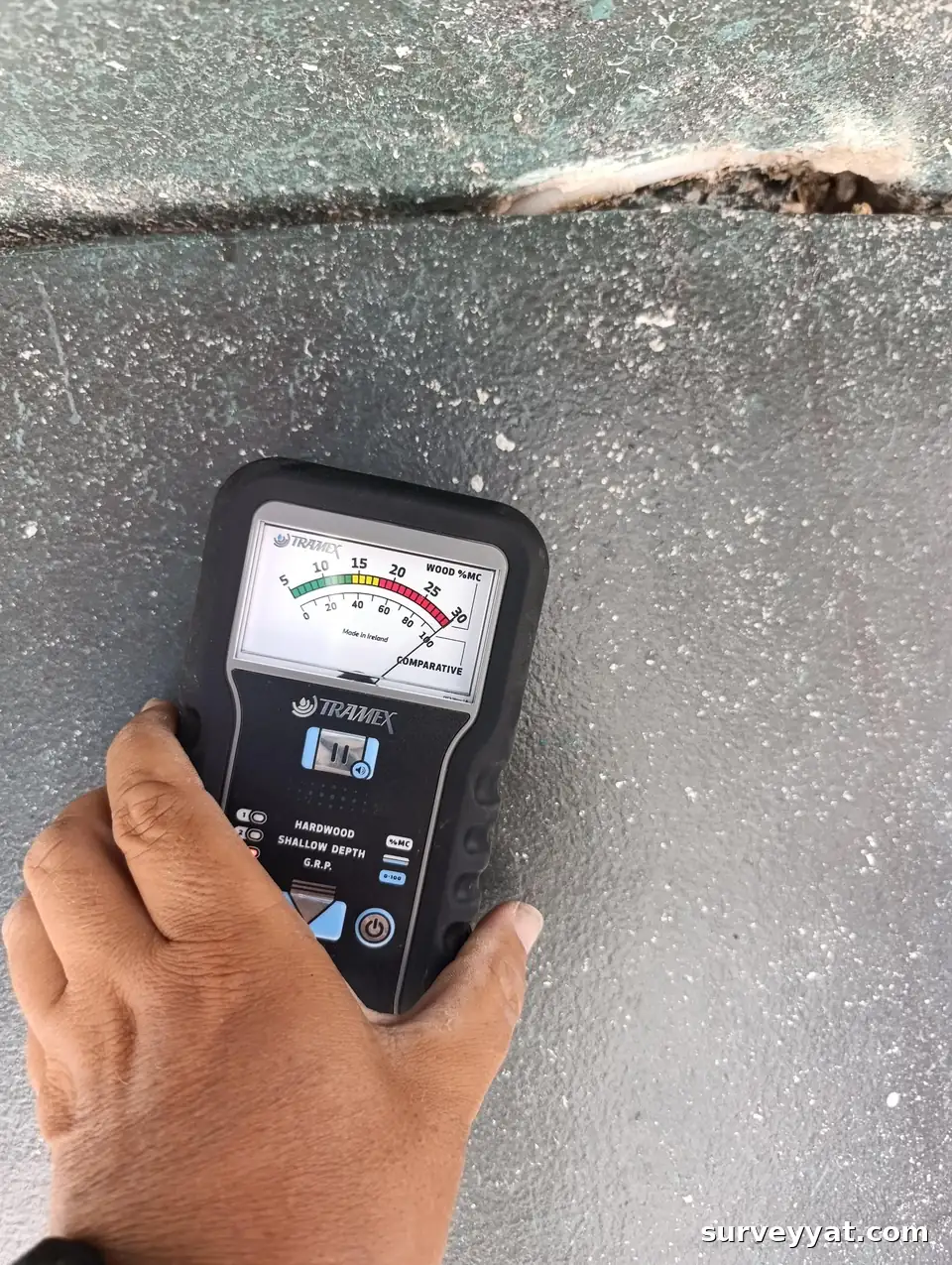
What readings mean
| Reading (comparative scale, GRP range) | What it means | What follows |
|---|---|---|
| 0-20 | Dry; a new boat or a very well dried laminate. Thin laminates can also read here when dry. | No finding. A protective epoxy coating may be considered. |
| 21-38 | Typical for boats in service after a period ashore. | Normal. This is also the target range for epoxy coatings. |
| 39-52 | Typical for boats in service that have not dried enough ashore. | Check drying time; repeat readings if needed. |
| 53-80 | Persistently high, no blisters. Signs of moisture absorption; blistering unlikely in the short to medium term. | Re-test after time ashore. Protective epoxy is not recommended at this stage. |
| 80-100+ | Clear moisture absorption, no or local blisters. Blisters are likely within a few seasons. | Monitor yearly. Protective epoxy or treatment is not recommended at this stage. |
| 60-100+ with blisters | High readings with visible blisters: an osmotic hull. | Monitor regularly; treatment is considered once blisters cover a significant part of the underwater hull. |
What can mislead a reading
These give artificially high readings and are noted in the report:
- Metal inside or behind the laminate: keel, bolts, tanks, chain in the locker.
- Carbon fibre, some graphite-treated Kevlar and aluminium honeycomb cores.
- Copper-granule or graphite antifoulings (ordinary antifouling does not prevent a reading).
- Bilge water, wet insulation or condensation inside; the meter senses moisture about 2-3 cm deep.
- Freezing temperatures and surface condensation.
- Lines where frames, stringers and bulkheads meet the hull; water collects there and reads locally high.
How we take readings
- The hull is mapped at regular intervals below and above the waterline; the dry topsides serve as a reference.
- Sound, dry GRP should read no higher than a dry piece of hardwood kept in the same conditions; a clear difference points to dissolved substances in the laminate.
- Cored areas of deck and coachroof and the areas around fittings are scanned closely.
- Every reading location is photographed and entered in the report's measurement table; findings are graded A-B-C.
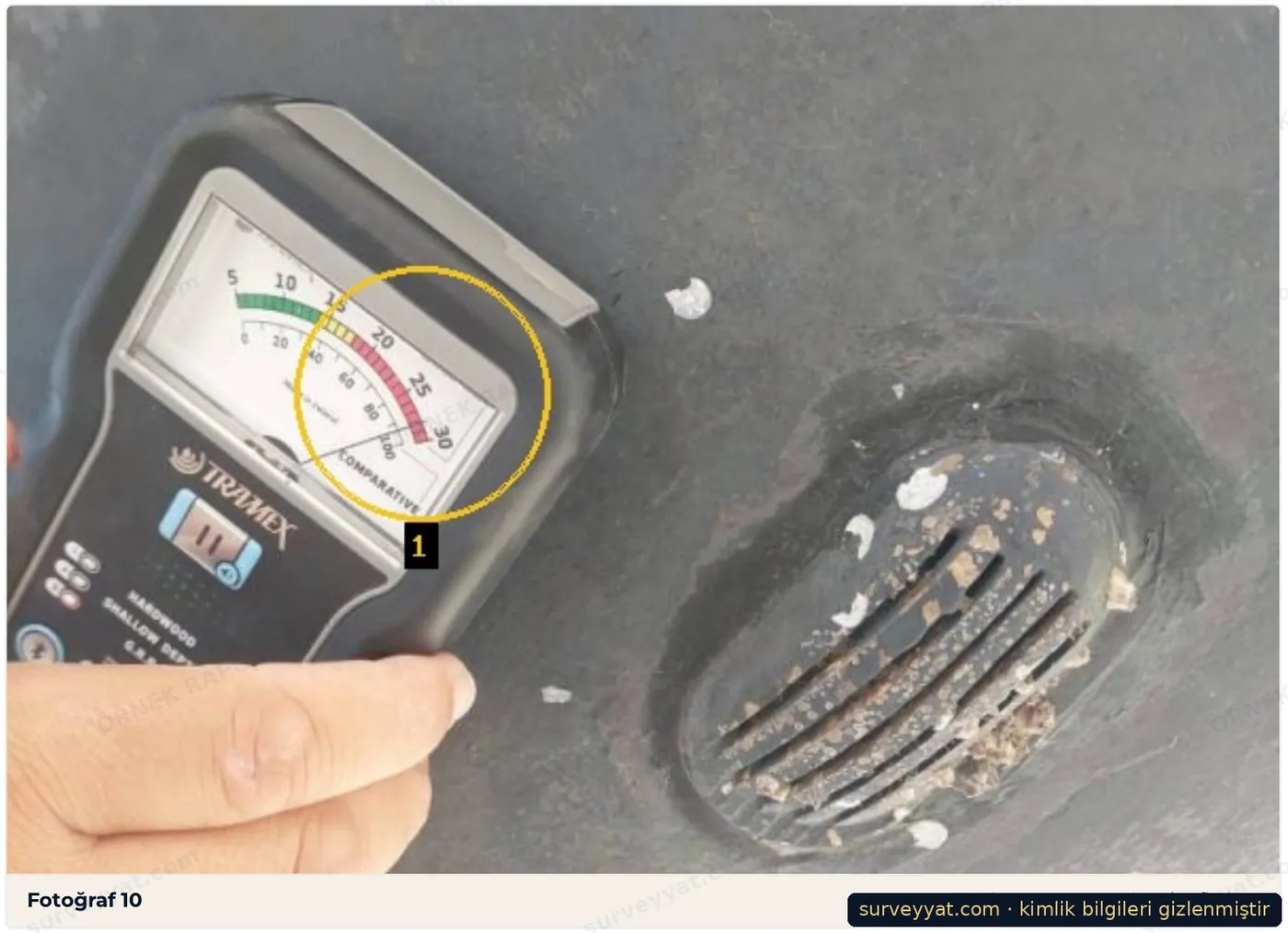
Taken from a real client report (96 pages, issued in Turkish). Boat name, make/model, report number, hull and engine numbers, place, date and people are withheld. More pages from the report
Interpret your own reading
Your own reading gives you an idea; a buying decision needs a survey where the whole hull is mapped and backed by visual inspection and a sounding hammer. See also our osmosis survey page.