The sea trial is the second half of a pre-purchase survey and it reveals everything the haul-out cannot: how the engine behaves under load, vibration, gearbox, steering gear, instruments and the sailing systems. A boat that looks right ashore can tell a very different story at sea.
On a sea trial most of the information arrives not in the first five minutes at full load but in the twentieth. That is where the temperature curve flattens, or does not.
A habit carried over from years of skippering: as the throttle goes on, watch the exhaust water as well as the gauges. A drop in flow is usually noticed before the temperature reading moves.
1. Cold Start
The engine must be started cold, an engine warmed by the seller beforehand hides both cranking behaviour and the colour of the first exhaust smoke. Watch: cranking time, first smoke (blue = oil, white = water or unburnt fuel, black = over-fuelling), idle stability and any abnormal noise.
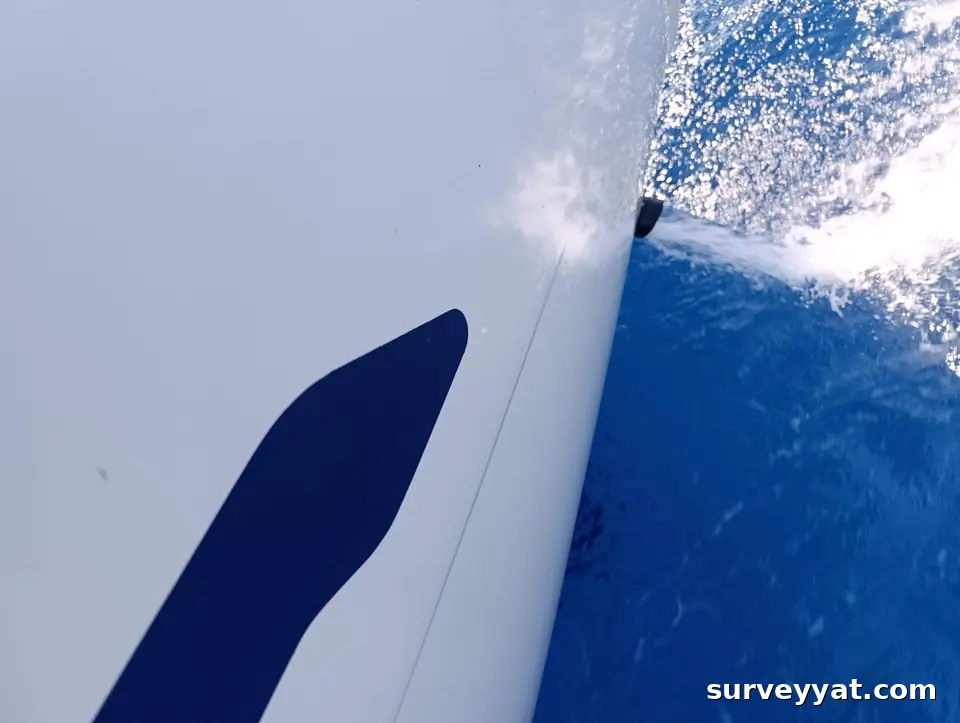
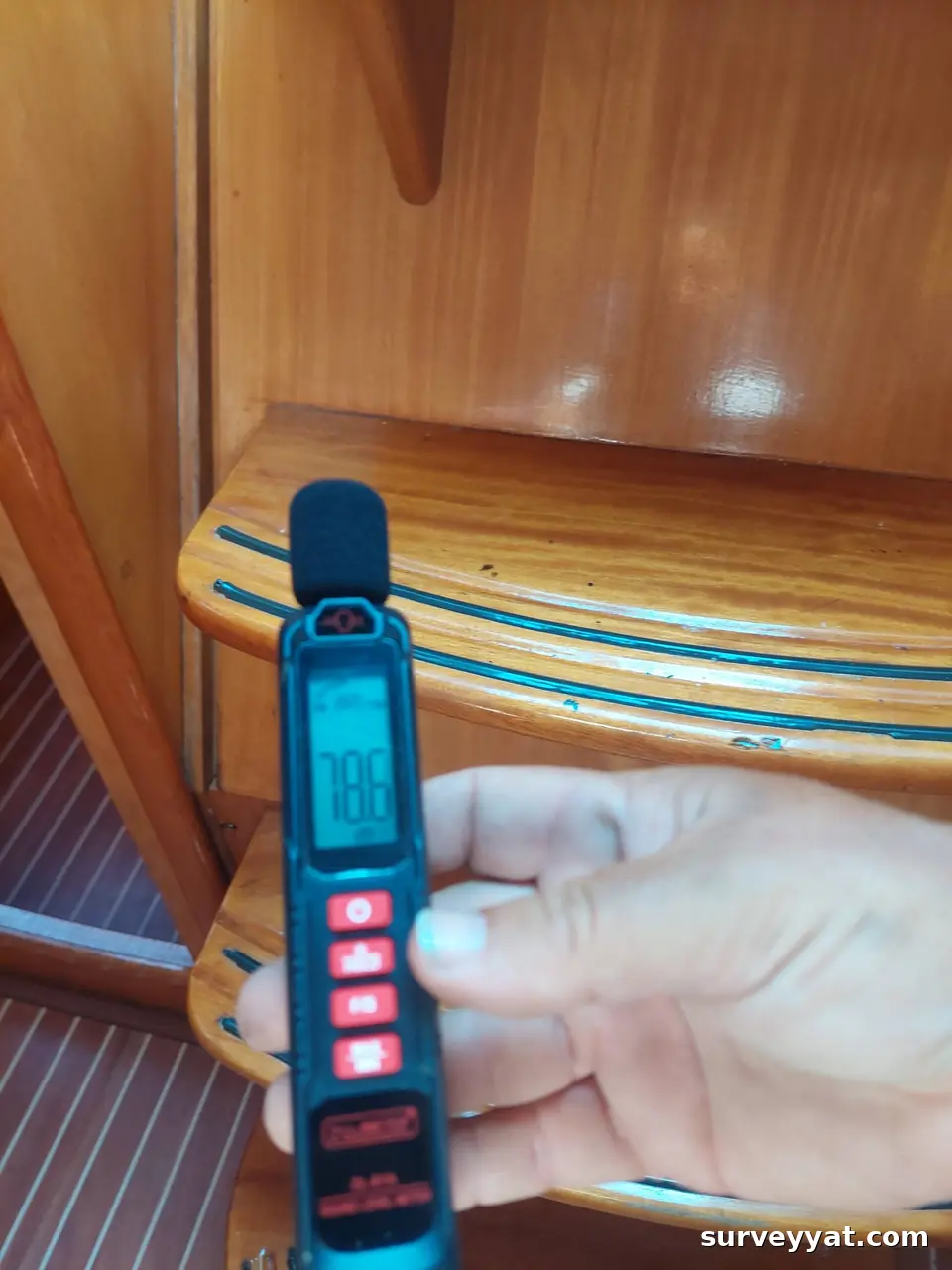
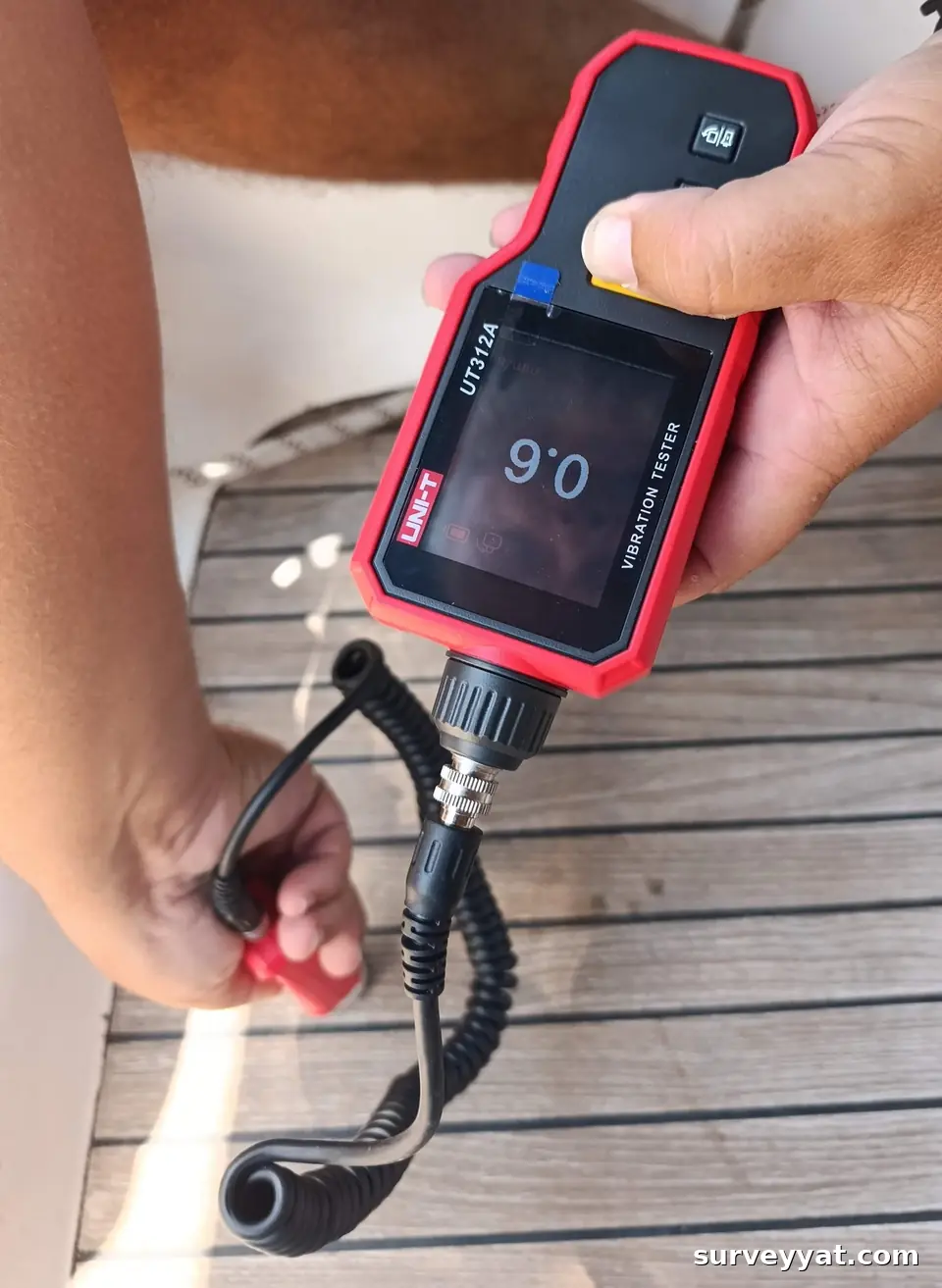
2. Staged Load and Maximum Revolutions
- Revolutions are raised in stages, with temperature, oil pressure and charging monitored at each step.
- Does the engine reach the manufacturer's rated maximum? Falling short points to propeller mismatch, fouled hull, fuel delivery or a tired engine.
- Several minutes at maximum: is temperature stable, is cooling water flow steady, is there smoke?
- Changes in exhaust note, rising vibration and gearbox noise are recorded.
3. Gearbox and Manoeuvring
Any delay, shudder or slip when engaging ahead and astern? Does the boat move when ahead is engaged at idle (clutch health)? Close-quarters handling, windlass and bow thruster where fitted are tested.
4. Steering and Autopilot
Play, stiffness or pulling to one side; engagement of the emergency tiller where fitted. Does the autopilot hold a course, and are its corrections excessive? Autopilot failure is a real operating cost on long passages.
5. Instruments and Electronics
- Depth, log and wind instruments, are the readings plausible?
- Plotter, radar, AIS, VHF: DSC test and antenna check.
- Navigation lights, horn, bilge alarms.
- Generator under load; voltage behaviour with air conditioning and refrigeration running.
6. Additional Items on a Sailing Yacht
- Setting and furling the sails; any stiffness in the furling gear.
- Rig behaviour at different wind angles, mast movement, the keel-hull area.
- Winch operation, running rigging condition, a tacking test.
- Balance and helm load in the transition between engine and sail.
7. Values Recorded During the Trial
| Value | Why it is recorded |
|---|---|
| Maximum RPM | Propeller match and engine health |
| Cruise RPM and speed | Real range and consumption |
| Engine temperature | Condition of the cooling circuit |
| Oil pressure | Indicator of internal wear |
| Charging current / voltage | Alternator and battery bank health |
| Vibration and noise notes | Shaft alignment, propeller, bearings |
8. What Trials Turn Up Most Often
- Not reaching rated revolutions, the most frequent finding; usually propeller mismatch or a fouled hull, sometimes a tired engine.
- Vibration rising with revolutions, shaft alignment or propeller balance.
- Temperature climbing under load, blocked heat exchanger, tired impeller, raw-water circuit.
- Delay in the gearbox, clutch or hydraulic level.
- Autopilot wandering, compass calibration or drive unit.
Frequently Asked Questions
9. Book a survey with sea trial
Ashore and afloat in one scope, reported with photographs and recorded readings.
Related Pages
Prepared by SurveyYat, ABYC Professional Member, 149 GT Yacht Captain. Last updated: September 2026.
Downloadable forms
The forms we use for this are free to download and fillable.
Continue with this topic
- How are the readings interpreted?: Values read at each rpm step and what smoke colour means.