A sea trial is not a cruise; it is a measurement session. It starts from cold, rpm is raised step by step and the same values are read at every step. The numbers mean something only against the maker's data, against the other engine, and in how they change as rpm rises.
Cold start
The engine must not have been warmed beforehand. Cranking time, first smoke and how the idle settles are watched in the first thirty seconds; a warm engine hides all three. The seller is asked not to run the engine before survey day.
What is read at each rpm step
- Speed
- Read from GPS and recorded with rpm. Lower speed than expected at a given rpm can point to a foul bottom, the wrong propeller or excess load.
- Full throttle
- The engine should reach the maker's rated full-load rpm. If it does not, propeller choice, load or engine power are questioned.
- Coolant temperature
- Should hold steady at thermostat temperature. A slow climb on a long run points to a heat exchanger starting to block or a tired raw-water pump.
- Oil pressure
- Compared with the maker's idle and cruising values. A marked drop as the engine warms is looked at further.
- Exhaust elbow and gearbox
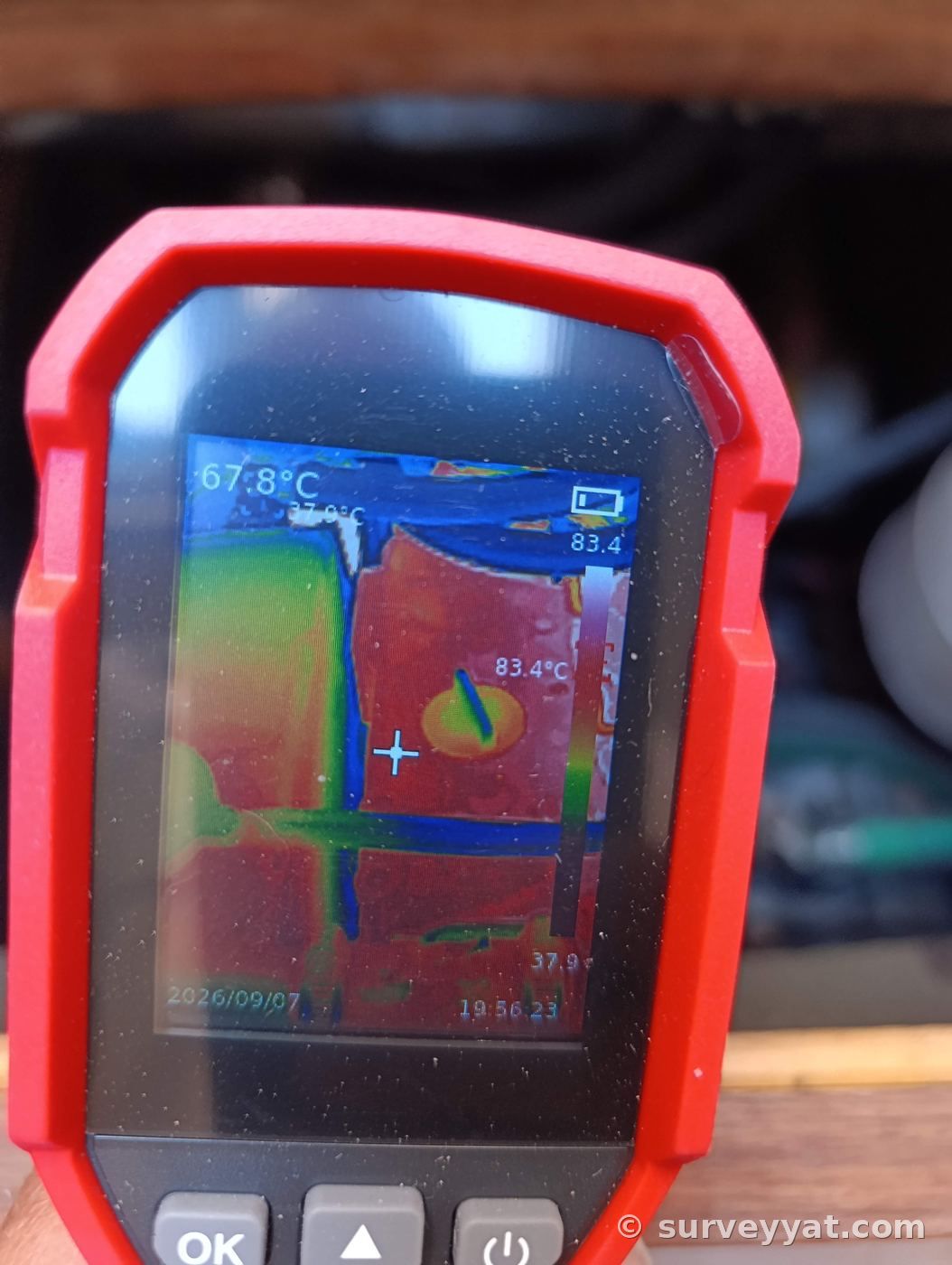
- Read with an infrared thermometer. A clear difference between two engines shows which side the problem is on.
- Vibration
- Measured against rpm. Vibration rising at a particular rpm points to shaft alignment, mounts or propeller balance.
- Cabin noise
- For comparison: what matters is the difference between engines at the same rpm, or against earlier reports.
What smoke colour tells you
- Black
- Unburnt fuel: overload, air filter, turbo or injectors. A brief light haze at full throttle can occur; continuous black smoke should not.
- Blue
- Burning oil: rings, valve stem seals or turbo seals. Compression and blowby readings are called for.
- White
- Normal briefly on a cold start. White smoke that persists once warm can mean water getting into the combustion chamber.
Other tests
Ahead-astern engagement, rudder hard over to hard over, emergency stop and alarms, autopilot and instruments, bow thruster, generator under load, and on a sailing yacht the sails and winches. Water entering the bilge under way and the stern gland are watched throughout.
How the values are recorded
Readings go into a table arranged by rpm step: idle, intermediate steps, cruising rpm and full throttle. Each row holds speed, coolant temperature, oil pressure, exhaust elbow and gearbox temperatures, vibration and cabin noise. On a twin-engine boat each engine has its own column, so differences show at once. When the same table is filled in years later, it becomes a reference showing how the boat has aged.
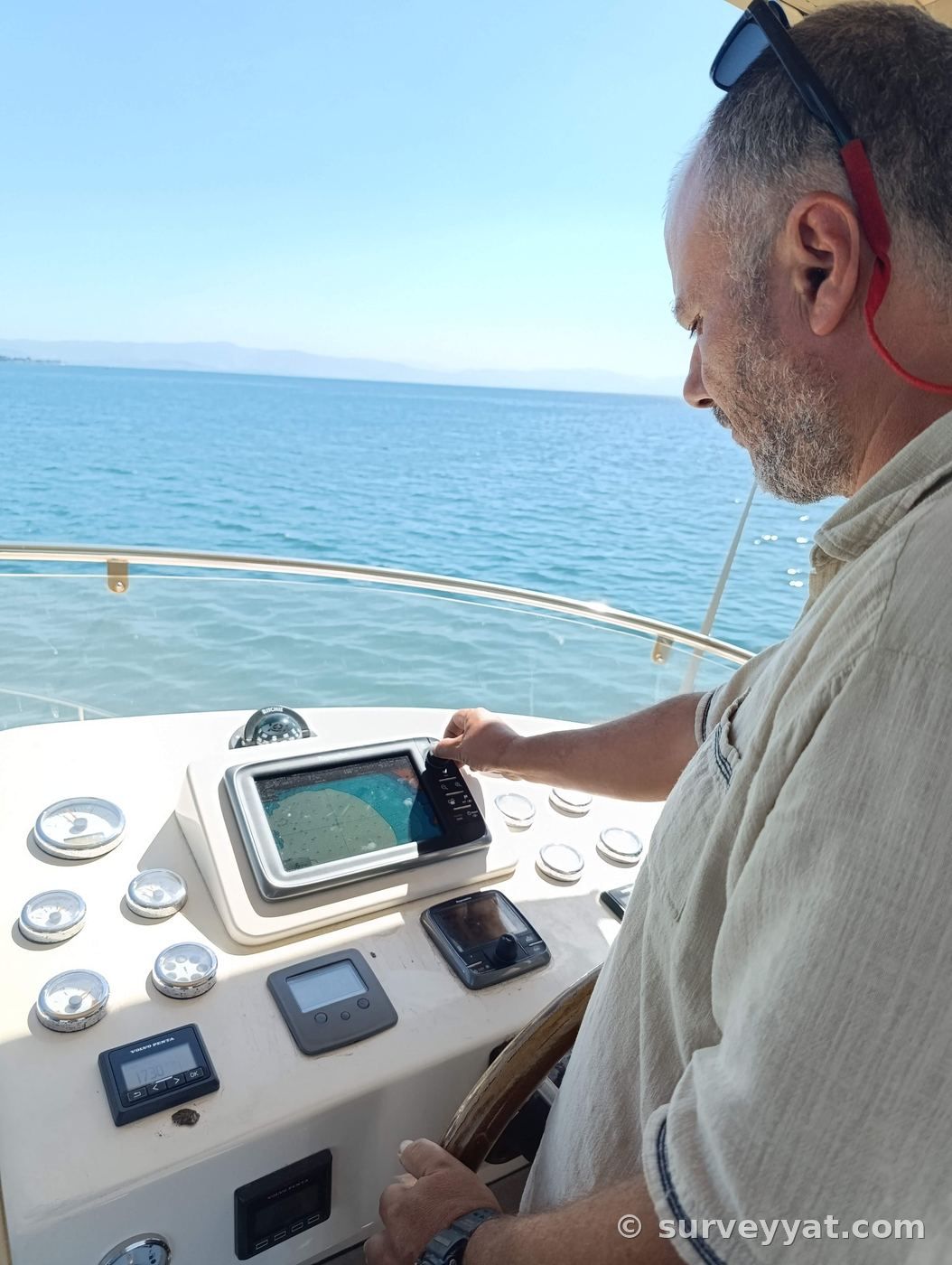
The conditions of the readings are noted too: sea state, wind, people aboard, fuel and water levels. The same boat runs at different speeds with full and empty tanks; a speed with no conditions recorded cannot be compared.
Reading the difference on twin engines
On motor yachts the two engines are usually the same age and hours, so each is the best reference for the other. A clearly higher coolant temperature on one at the same rpm points to that side's heat exchanger or raw-water pump. A difference in exhaust elbow temperature shows cooling water flow. A difference in reaching rated rpm can come from the fuel system, turbo or propeller. The survey identifies and reports the difference; finding the root cause is usually the engine technician's job.
Sea trials on sailing yachts
On a sailing yacht the engine test is shorter, but sails and rig are seen under load. Upwind, the rig's behaviour, slack in the leeward shrouds, the feel of the helm and how quickly the boat rounds up are watched. Sails are set and furled, a reef is put in and the winches are worked. Water entering the bilge and the area around the keel joint are checked under way.
Straight after the trial
Before and just after the engines are stopped, the engine room is scanned with the thermal camera; hot connections, hot spots on the exhaust line and leaks are clearest at that moment. The bilge is checked again, and the engines are checked for traces of oil or coolant.