A good survey report is not a long list of faults; it is a document that makes a decision possible. Three things should come out of it: should you buy this boat, if so how much less should you pay, and what will the first season cost you.
1. What the Report Contains
- Identification: vessel details, HIN/CE, length, year, engine type and hours, date, place and scope.
- Scope and limitations: what was inspected and what was not. Never skip this, "not inspected" does not mean "no problem".
- Findings: location, description, photograph and priority class.
- Summary and recommendations: overall condition, urgent items, estimated costs.
- Value opinion: where requested.
2. Priority Classes, What to Read First
| Class | Meaning | Action |
|---|---|---|
| A, Critical / safety | Directly affects safety of life or vessel | Rectify before going to sea; goes straight into the negotiation |
| B, Short term | Will worsen if left this season | Budget for it; most negotiating items sit here |
| C, Planned maintenance | Normal wear, item due | Goes on the maintenance schedule |
- ASafetyRectify before going to sea. Not a negotiating point.
- BThis seasonNeeded within this season. Where negotiation happens.
- CPlannedOrdinary maintenance calendar. Not for negotiation.
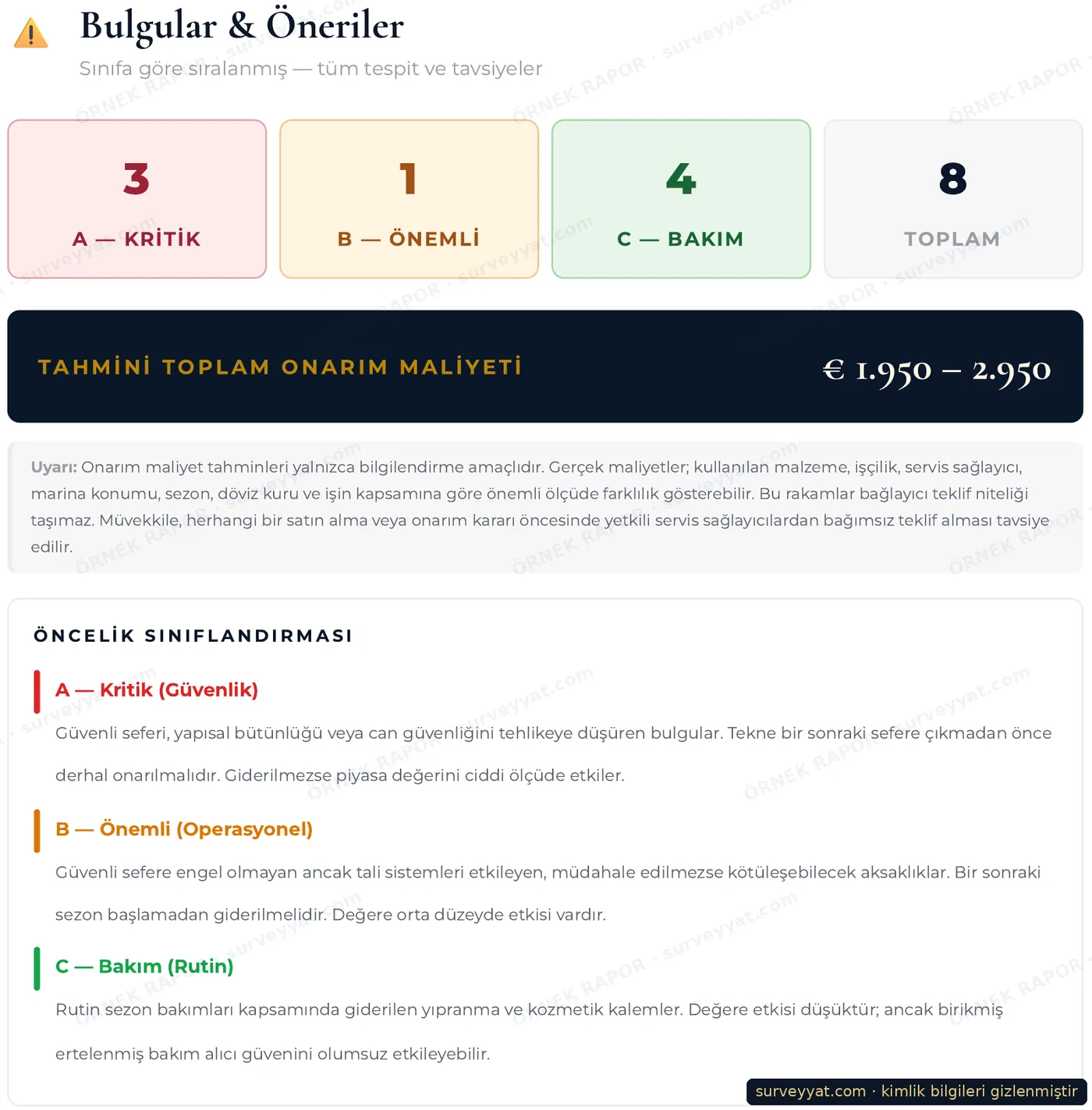
Taken from a real client report (96 pages, issued in Turkish). Boat name, make/model, report number, hull and engine numbers, place, date and people are withheld. More pages from the report
3. Decoding the Language
- "Not inspected", no access, dismantling required, or outside the agreed scope. The risk has not gone away; it simply was not seen.
- "Elevated moisture readings", not osmosis on its own. Drying time, number of readings and the comparison area must be stated.
- "Void detected on sounding", suspected delamination. Location and extent decide severity: a local void on deck is not the same as widespread voids in the hull.
- "Recommended" vs "required", the first is an improvement, the second is not optional. The wording is deliberate.
- "Undocumented", it may have been done, but there is no record. Surveys work on records.
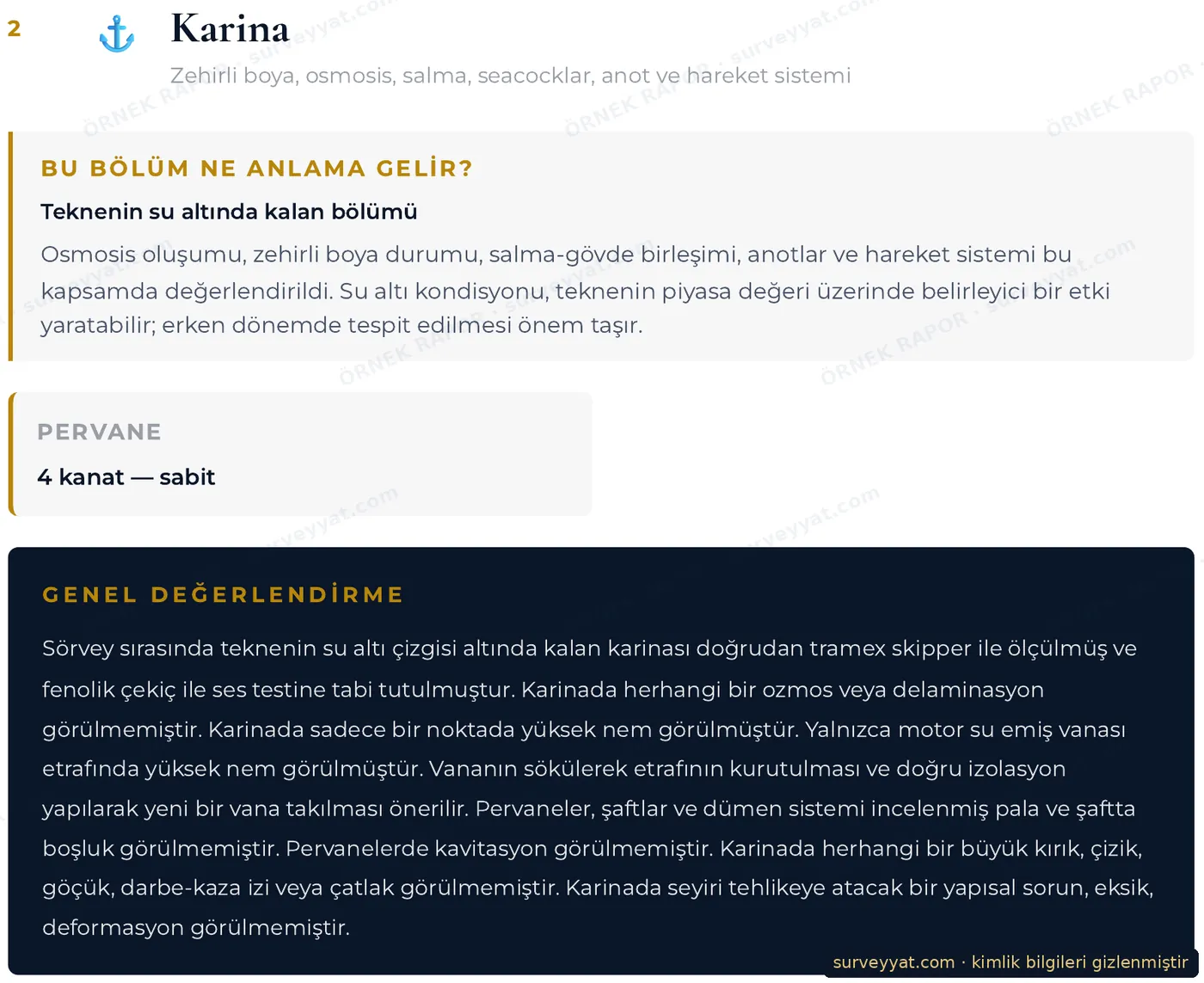
Taken from a real client report (96 pages, issued in Turkish). Boat name, make/model, report number, hull and engine numbers, place, date and people are withheld.
4. Reading the Cost Estimates
Costs in a report are estimated ranges, not quotations. Labour varies by region, parts lead time and access. A sound approach: add the upper end of class A items and half of class B, that figure is what you can defend at the negotiating table.
5. After the Report: Three Roads
- Proceed. Findings are within expectations; class A items are rectified or deducted and the sale completes.
- Renegotiate. Total repair exposure exceeds expectations; you work through the report item by item. The report is your strongest tool here because it is documented, not emotional.
- Walk away. Structural problems, widespread delamination, keel attachment damage, hull-to-deck separation, or repair costs approaching the value of the boat. This is when the survey fee returns the most money it ever will.
6. Common Misreadings
- Treating the number of findings as severity. Sixty findings do not mean a worse boat than twelve; it reflects the surveyor's level of detail. Read the classification.
- Skipping the scope section. A decision made without knowing what was not inspected is a decision made on partial information.
- Deciding without the photographs. Text says "corrosion staining"; the photograph tells you whether it is superficial or structural.
- Forwarding the whole report to the seller. The report is yours. Sharing the relevant items is enough.
Frequently Asked Questions
7. Already have a report?
We can read another surveyor's report with you and explain what it means in practice.
Related Pages
Prepared by SurveyYat, ABYC Professional Member, 149 GT Yacht Captain. Last updated: September 2026.
Continue with this topic
- Negotiating with the report: Which findings count and how to turn them into cost.