The engine is what buyers fear most, and usually they fear the wrong thing. Hours alone say nothing: an engine running 40 hours a year can be in worse shape than one running 400. What decides it is how it runs and how it has been kept.
This page sets out how the engine and mechanical systems are assessed in a survey, and draws a clear line between what is in scope and what needs separate expertise.
1. What Hours Tell You, and What They Don't
| Situation | Assessment |
|---|---|
| Under 20 hours a year | Corrosion, dried seals, fuel degradation and battery life come to the front. Low hours are not good news. |
| 50-150 hours a year | The ideal band in private use. The engine reaches temperature, oil circulates, moisture does not collect. |
| 300+ hours a year | Charter or commercial use. Hours are high but maintenance is usually regular and documented; read with the service record. |
| Diesel, 2,000-4,000 hours | On a well-kept diesel, overhaul is still some way off; oil consumption and blue smoke are tracked. |
| Diesel, 6,000+ hours | Overhaul comes into view. It belongs in the budget as a line item. |
| Petrol outboard | Shorter life than diesel; above 1,500 hours calls for serious assessment. |
2. Cold Start: The First Thirty Seconds
Most of the information comes when the engine first fires from cold. That is why we ask that it is not warmed before the survey.
- Cranking time: long cranking points to air in the fuel line or low compression.
- First smoke colour: blue, burning oil; white, unburnt fuel or water; black, over-fuelling or restricted air.
- Idle stability: an uneven idle points to injectors or valves.
- Warm-up time: how long it takes to reach operating temperature says something about the thermostat and cooling circuit.
- Noise and vibration: knocking, tapping or an unexpected frequency is recorded.
3. Cooling Circuit
| Looked at | Why |
|---|---|
| Raw water pump and impeller | Age and vane condition; a shed vane travels to the heat exchanger and blocks it. |
| Heat exchanger | Salt build-up and blockage; the last cleaning date is asked for. |
| Coolant condition and level | Old coolant loses its protection; colour and level are checked. |
| Hoses and clamps | Hardening, cracking, double clamping. A single clamp on a raw water line is not enough. |
| Temperature behaviour | Whether it holds steady under load; spot readings taken with a laser thermometer. |
| Anti-siphon valve | Required where the exhaust runs below the waterline; without it the engine can flood. |
4. Exhaust and Crankcase
- Wet exhaust run: fatigue in the composite elbow and muffler, leak traces, soot.
- Exhaust colour and smell: observed under load; a dry exhaust outlet indicates a raw water pump problem.
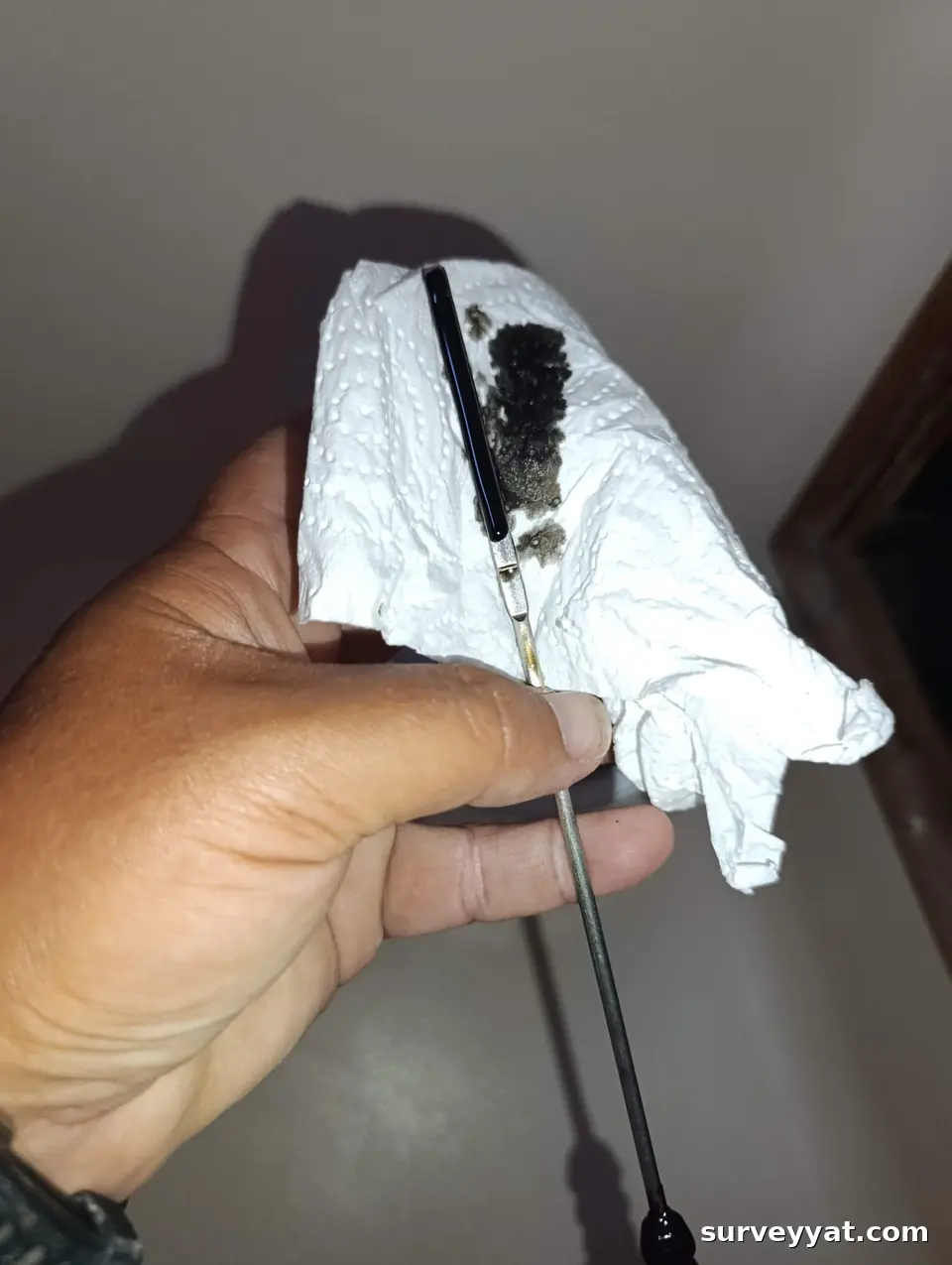
- Crankcase breathing: excess pressure and oil mist foretell ring wear. Numerical blowby measurement is a separate service.
- Oil leaks: seals, gaskets and turbo connections; an accumulated film also shows its age.
- Engine mounts: sagging, cracking and the effect on alignment.

5. Shaft Line and Propeller
- Alignment: poor alignment consumes the seal, the bearing and then the gearbox.
- Cutless bearing: play measured by hand; beyond a point it turns into vibration and wear.
- Shaft seal: traditional stuffing box or dripless; age and weeping.
- Propeller: blade deformation, nicks, cavitation marks, balance.
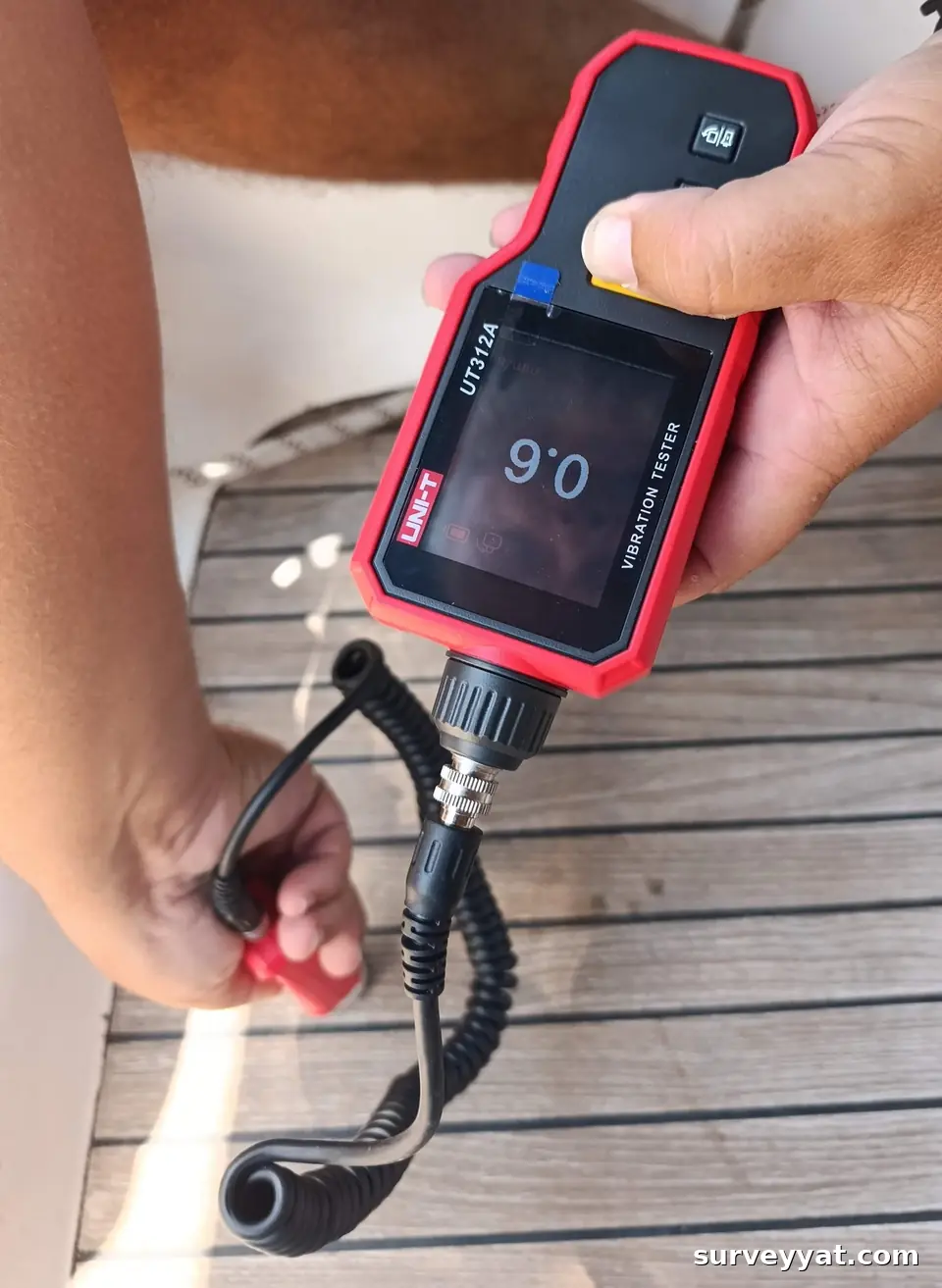
- Vibration reading: a figure from the vibration meter separates alignment problems from propeller problems.
- Anodes: shaft and propeller anodes; rapid consumption points to an electrical issue.
6. Gearbox and Controls
- Oil level, colour and smell, a burnt smell is clutch wear.
- Response time in ahead, astern and neutral.
- Control cable or electronic control; sticking and delay.
- Gearbox cooler and its hoses.
7. Measured on Sea Trial
| Reading | What is looked at |
|---|---|
| Wide open throttle | Whether the builder's stated band is reached. If not: wrong propeller, a heavy boat, or an engine down on power. |
| Cruise revs and speed | Expected speed at expected revs. |
| Temperature stability | Holding steady under sustained load. |
| Manoeuvring response | Delay or shudder on ahead-astern changes. |
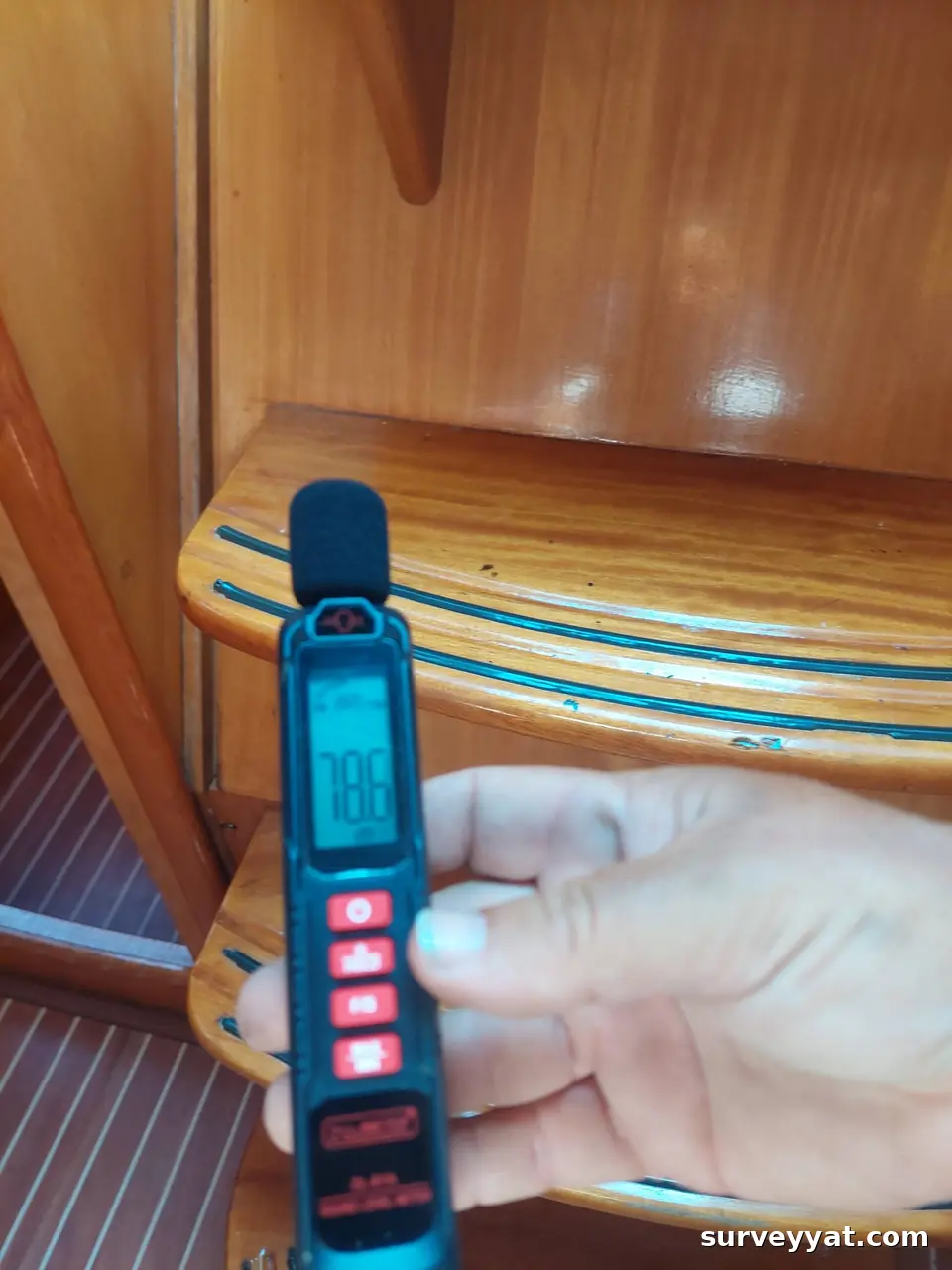
| Vibration and noise | Resonance points across the rev range. |
See the sea trial checklist for the full list.
8. Documents Matter More Than Numbers
The strongest evidence on an engine is not a reading but a continuous service record. A run of invoices and work orders showing regular maintenance says more than any single figure.
- Oil and filter intervals, with date and hours
- Impeller and coolant renewal records
- Major work done: overhaul, turbo, injectors, heat exchanger
- Any previous oil analysis results
- Winterising records
9. When an Engine Technician Is Needed
If the survey raises a doubt, the right step is not to guess but to measure. An independent engine technician is coordinated when:
- Abnormal smoke or long cranking from cold
- Excess crankcase pressure or oil mist
- Wide open throttle band not reached
- Water in the oil or oil traces in the coolant
- A buying decision on a high-hour engine
For scope and fee see the survey calculator.
10. Oil analysis: seeing inside without dismantling
- Wear metals: levels of iron, chromium, aluminium, copper, lead and others; clues to which parts are wearing.
- Coolant contamination: traces of glycol, sodium or potassium; a sign of gasket or heat-exchanger trouble.
- Fuel dilution: thinning of the oil; may point to injector or combustion problems.
- Soot and oxidation: combustion quality and oil-change interval.
- Silicon (dirt): air filter or intake leaks.
On a pre-purchase survey oil analysis is an optional extra; we recommend it on high-hours, high-output engines and generators. The laboratory returns results within a few working days and they are added to the report. If the seller has just changed the oil, that is noted because it affects the results.
11. Taking the sample and reading the result
- The engine is brought to operating temperature; straight after the sea trial is ideal.
- The sample is drawn through the dipstick tube with a vacuum pump and clean tube, from mid-sump, not from the sludge at the bottom.
- A clean sample bottle is labelled with engine, serial number, engine hours and hours on the oil.
- The sample goes to the laboratory the same or next day.
Separate samples can be taken from the generator and gearbox.
One analysis is a photograph; several are a film. The most valuable information is the trend across samples from the same engine at regular intervals. With a single pre-purchase sample, results are compared with the laboratory's typical ranges for the engine type and with the hours on the oil.
A high value alone is not a verdict; it is read together with sea-trial readings, compression and blowby. More: engine overhaul.
Frequently Asked Questions
Scope: The survey is non-destructive and nothing is dismantled; details on the survey types page.
Findings we often see on site
- Corroded exhaust elbow: Salt crystals and rust on the outside of the mixing elbow; high elbow temperature on sea trial.
- Collapsed engine mounts: Mount rubbers oil-soaked and cracked; the engine sits low on one side.
- Salt build-up and leaks in the cooling circuit: White salt deposits at raw-water pump and heat exchanger joints; drips beneath the pump.
Continue with this topic
- Wet exhaust system: Elbow to outlet, siphon break and CO risk.
- Overhaul or replace?: The data behind the decision and the scope.
Related Pages
Send the make, model, hours and what you have noticed; we will set the scope together.
💬 WhatsApp 📝 Written quote 📞 +90 501 5 SURVEY