The rig is the most heavily loaded and least inspected system on a sailing yacht. That is why underwriters start asking questions once standing rigging passes ten years: a rig failure is rarely limited to losing the mast, deck, chainplates and often crew safety are involved.
1. Why Tension Cannot Be Judged by Hand
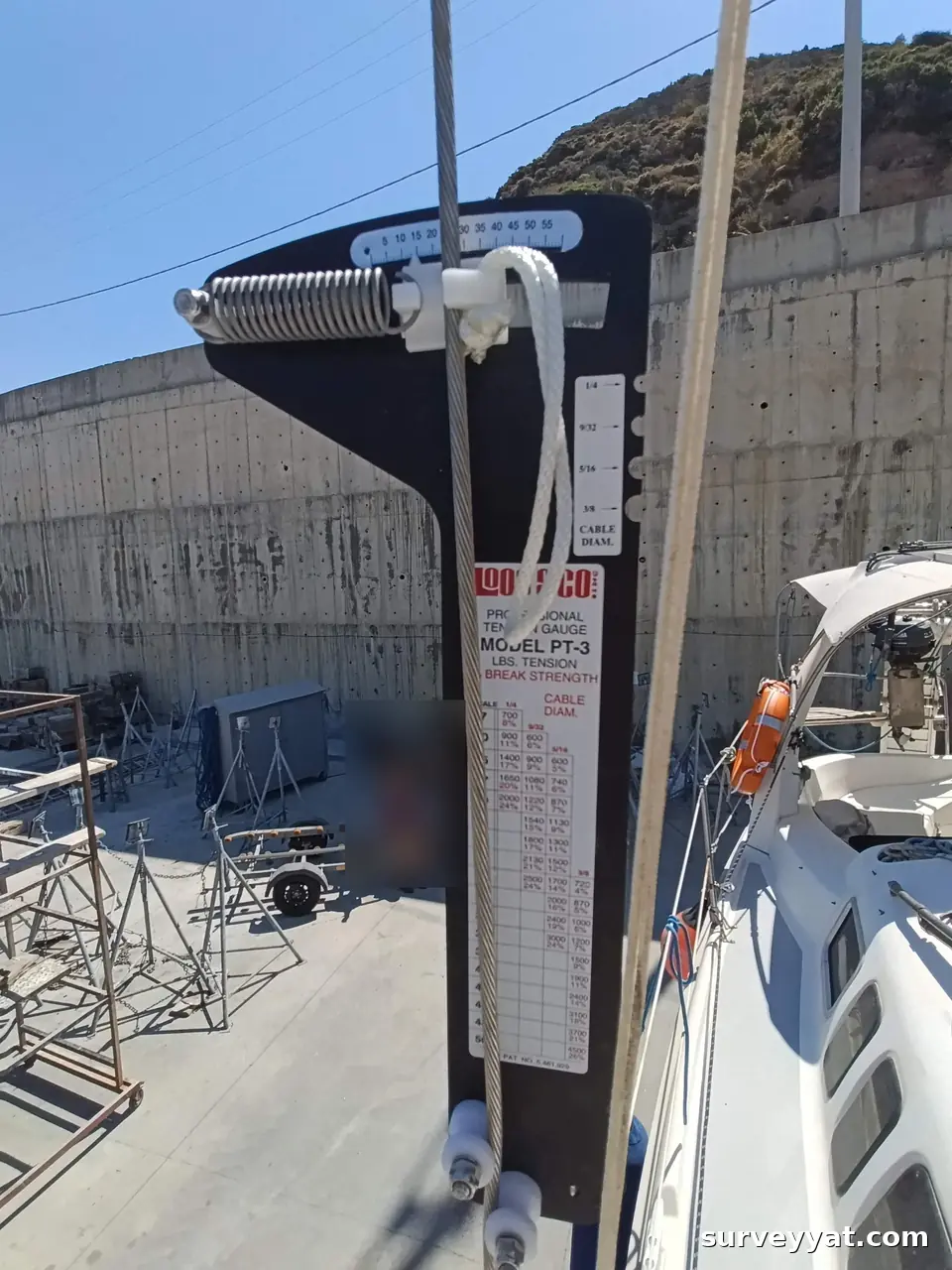
Correct tension is a defined percentage of the wire's breaking load (typically 15-20%, depending on the boat and rig type). Setting it without a gauge produces two errors:
- Slack rig: the mast moves, wire fatigues and terminals work-harden. The boat falls off upwind and performance suffers.
- Over-tensioned rig: the load goes straight into chainplates, deck and the keel area. Deck depression, leaks and cracking around chainplates start here.
- Uneven tension: a port-starboard difference leaves the mast out of column; the boat sails well on one tack and badly on the other. The most common and most easily corrected finding.
With a Loos & Co. gauge every wire is measured, values recorded, port and starboard compared and assessed against the builder's recommendation. The report carries numbers, not "the rig appears tight".
2. Checkpoints
Standing rigging
- Wire: broken strands (particularly at terminal exits), corrosion staining, permanent kinks.
- Terminals: crack search with a 30× loupe, a crack in a swage terminal means renewal.
- Toggles and clevis pins: wear, bending, missing split pins.
- Turnbuckle bodies and threads: corrosion, signs of strain.
Mast and boom
- Mast step: corrosion at the heel on aluminium spars, particularly deck-stepped rigs; blocked drainage.
- Sheave boxes, tracks and halyard exits: cracks usually start around openings.
- Tangs, welds and rivet lines.
- Gooseneck, kicker and vang attachment points.
Deck side
- Leak traces and salt staining around chainplates, softness in the laminate, checked with the sounding hammer.
- Staining on headlining and inside lockers; closed compartments checked with a borescope where needed.
- Mast step support structure below deck.
Running rigging and hardware
- UV fatigue in halyards and sheets, cover wear, condition of terminations.
- Furling gear: stiffness, bearing noise, even wrapping.
- Winch service: dried grease, tired pawls, torque behaviour.
3. When Should a Rig Be Replaced?
| Condition | General approach |
|---|---|
| Age | Usually 10-12 years for wire rigging; sooner with heavy use or in a hot climate |
| Cracked terminal | A single crack justifies renewal, a rig is as strong as its weakest link |
| Broken strand | That wire is replaced immediately and its neighbours inspected |
| Insurer's requirement | Many policies require a report or renewal past a certain age |
| Before an offshore passage | A rig at the age limit is renewed before a long delivery |
Frequently Asked Questions
4. Book a rig check and tension measurement
Every wire measured, values recorded, port and starboard balance compared.
Related Pages
Prepared by SurveyYat, ABYC Professional Member, 149 GT Yacht Captain. Last updated: September 2026.
Scope: The survey is non-destructive and nothing is dismantled; details on the survey types page.
Findings we often see on site
- Hairline crack in a rigging terminal: A lengthwise hairline crack at the neck of a lower shroud terminal, seen under the loupe.
Continue with this topic
- Rudder and bearing renewal: From measuring play to acceptance.
- Rig and mast renewal: The decision and the sequence.