In heavy weather the rudder is one of the most heavily loaded parts of the boat. A little bearing play wears the stock and blade over time; renewal is planned by measuring the play and dropping the rudder.
When to renew
- The blade moves sideways when pushed and the play exceeds the maker's limit.
- Knocking or clunking at the helm under way.
- Water weeping at the bottom of the blade or where the stock exits; the blade has taken on water.
- Suspected corrosion, bending or cracking of the stock.
The sequence
- Measure the play. Ashore, between blade and hull and at the stock bearings.
- Drop the rudder. Steering linkage off, blade lowered; enough clearance or a pit under the boat is needed.
- Inspect stock and blade. Corrosion and straightness of the stock; water, the bond to the internal frame and the laminate of the blade.
- Renew the bearings. To the maker's bearing type and tolerance.
- Blade repair. A wet blade is dried and sealed; relaminated if needed.
- Refit and adjust. Steering, stops and autopilot linkage are reset.
Acceptance
Play is measured again ashore; at sea, hard-over to hard-over time and the feel of the helm are checked. The bearings are seen to be dry after relaunch.
What we often see
- Play in the rudder bearings: The rudder blade moves sideways when pushed by hand; play is felt in the bearing.
Bearing types
Rudder bearings differ with the boat's design. On some boats the stock runs in a tube inside the hull with two bearings; on others the lower bearing sits outside the hull on a skeg or bracket. Bearing materials vary too: composite, plastic-based or self-aligning roller bearings. Renewal follows the maker's bearing type and tolerance; if a different type is to be used, dimensions and fitting method are settled first.
Why water in the blade matters
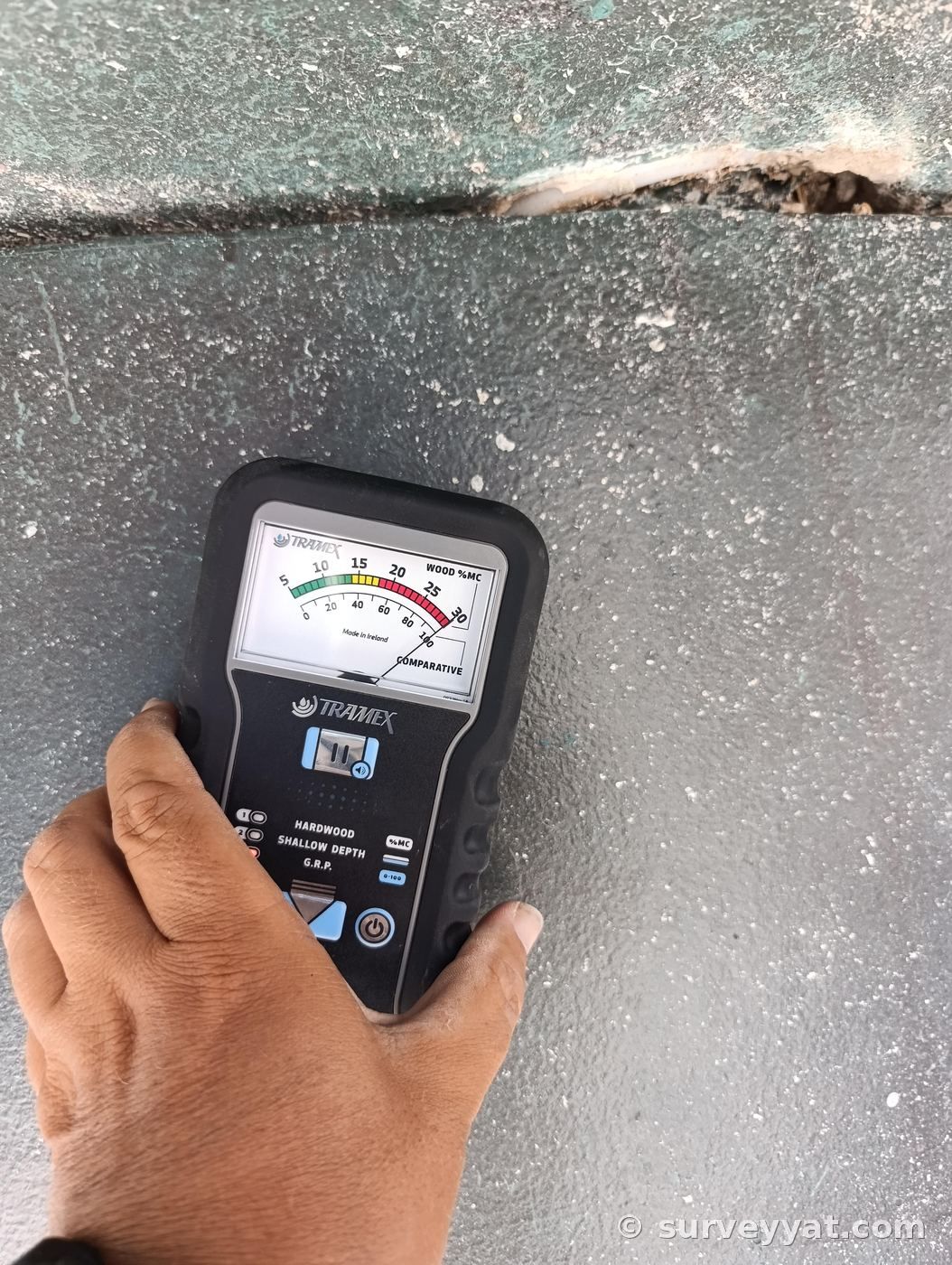
A GRP rudder blade carries a steel frame and a filling inside. When the blade takes on water, the frame can rust and the filling separate, unseen from outside. Water dripping from the bottom of the blade ashore, especially at the end of winter, shows there is water inside. On such a blade, replacing the bearings is not enough: the blade is opened, dried, the frame checked and the blade closed again. With serious damage, a new blade may be the better choice.
The steering system
When the rudder is renewed, the rest of the steering is reviewed too: on cable systems the cable, sheaves and tension; on hydraulic systems leaks and air; the quadrant and stops. As the autopilot linkage comes off and goes back with the stock or quadrant, the pilot is recalibrated afterwards and tried at sea.
Emergency tiller
Every boat should have an emergency steering arrangement for when the main system fails. A rudder renewal is a good moment to check that the emergency tiller fits the stock and can be used. More than one person aboard should know where it is and how it goes on.
Timing
Dropping a rudder needs clearance under the boat, so if the job is planned for a haul-out, tell the marina in advance; stands and position are arranged accordingly. In some yards a pit or a lift-and-hold arrangement is used instead.
On survey, the blade is pushed by hand fore and aft and sideways ashore to measure play, and the blade is sounded; at sea, even turning and any stiffness or vibration are watched.