A survey report is the strongest document in a negotiation, if it is used well. Treating every finding as a reason for a discount drives the seller away; putting the right findings on the table with their cost often wins back several times the survey fee.
Which findings belong in the negotiation?
- Grade A
- Directly affects safety; to be put right before going to sea. The heart of the negotiation: either the seller repairs before handover, or the repair cost comes off the price.
- Grade B
- Work needed within the season. Small one by one, but the total can be substantial; discussed together.
- Grade C
- Planned maintenance. Every boat has them and they are expected for its age; not used in negotiation.
Turning findings into cost
- Separate the list. Take the A and B findings from the report into a separate list.
- Get repair quotes. Not estimates: written quotes from a yard or tradesman. A documented figure shortens the argument.
- Present the total. Finding, report page and photo, quoted cost: one page, three columns.
- Offer two routes. The seller repairs and acceptance is by sea trial, or the amount comes off the price.
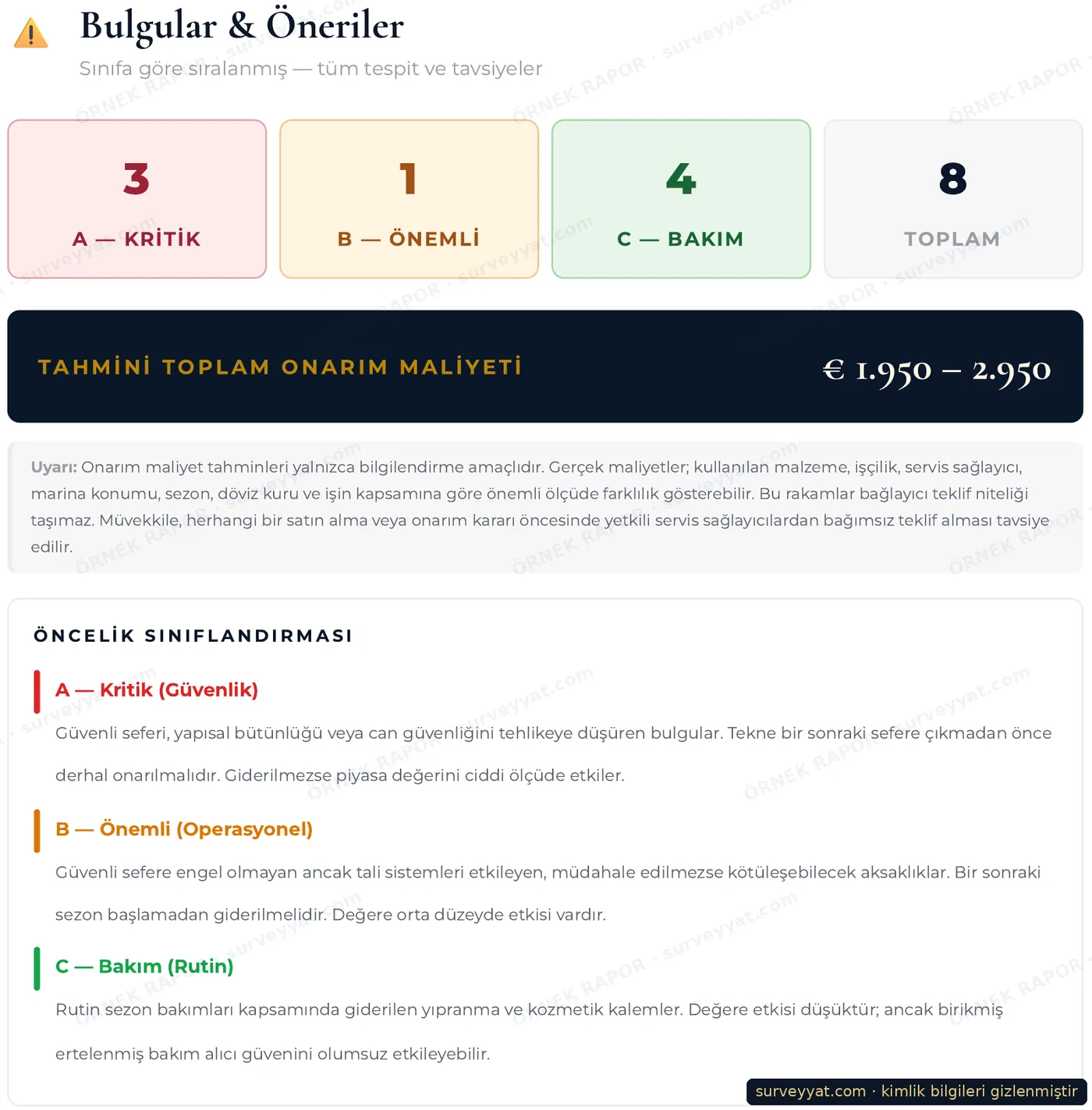
Taken from a real client report (96 pages, issued in Turkish). Boat name, make/model, report number, hull and engine numbers, place, date and people are withheld. More pages from the report
What the contract needs
The basis for negotiating is the survey clause in the purchase agreement: the deposit is subject to survey, with a refund if the result is unsatisfactory and a period for renegotiation. Without it, even with the report in hand, the seller has no obligation to come back to the table. A sample is on the purchase agreement page.
What not to do
- Hand the whole report to the seller: the report belongs to the party who paid for it. The relevant pages and photos are enough to negotiate.
- Use grade C maintenance items as grounds for a discount.
- Name a repair cost from a guess without a quote.
Continue with this topic
- Post-survey repair plan: From finding to schedule.
An example: from finding to figure
Say the agreed price for a 12-year-old, 42 ft sailing yacht is subject to survey. The report shows two grade A and five grade B findings. One A finding is a seacock below the waterline whose handle will not turn; the other is a hairline crack in a shroud terminal seen under the loupe. The B findings are rudder bearing play, rising moisture around two deck fittings, salt build-up on the exhaust elbow, one battery that has lost capacity, and antifouling that is due.
The buyer gets a written yard quote for each finding. The two A jobs must be done before going to sea; the seller is offered two routes: repair before handover with acceptance by inspection, or the cost off the price. On a boat with one cracked terminal, the other terminals of the same age are in question too, so the quote often becomes a full re-rig, and that is usually the biggest item in the negotiation.
B jobs look small one by one but add up. They are presented as one list with quoted costs. Annual maintenance such as antifouling is left out of the negotiation; it shows the buyer is serious and shortens the discussion.
The seller's side
Negotiation goes better remembering the other side has sums to do too. Sellers usually believe their boat is well kept, and the findings can surprise them as well. Presenting a finding as a recorded fact, with its photo and reading, rather than an accusation keeps the conversation calm. If the seller disputes a finding, the photo and reading are already in the report; the discussion runs on data, not between people.
If the seller prefers to have the repair done, the method and the acceptance criteria are written down: for a seacock, the new valve's material; for the rig, the type of wire and terminals and a tension reading after fitting. A repair made without written acceptance criteria can start a new argument at handover.
Timing
The survey clause in the contract is usually time-limited: within a set number of days after receiving the report, the buyer states acceptance, renegotiation or withdrawal. As the report arrives in 2-3 working days, repair quotes can be gathered within that window. If the window is tight, quotes for the largest items are requested first.