A moisture meter shows a number; what that number means depends on how the reading was taken and what it is compared with. Moisture is read as a map, not as a single value.
Conditions first
For reliable readings the boat must have been ashore and dry for at least one week. On a boat just out of the water, surface moisture reads high everywhere and hides the real problem. So the haul-out date is planned backwards from the survey date.
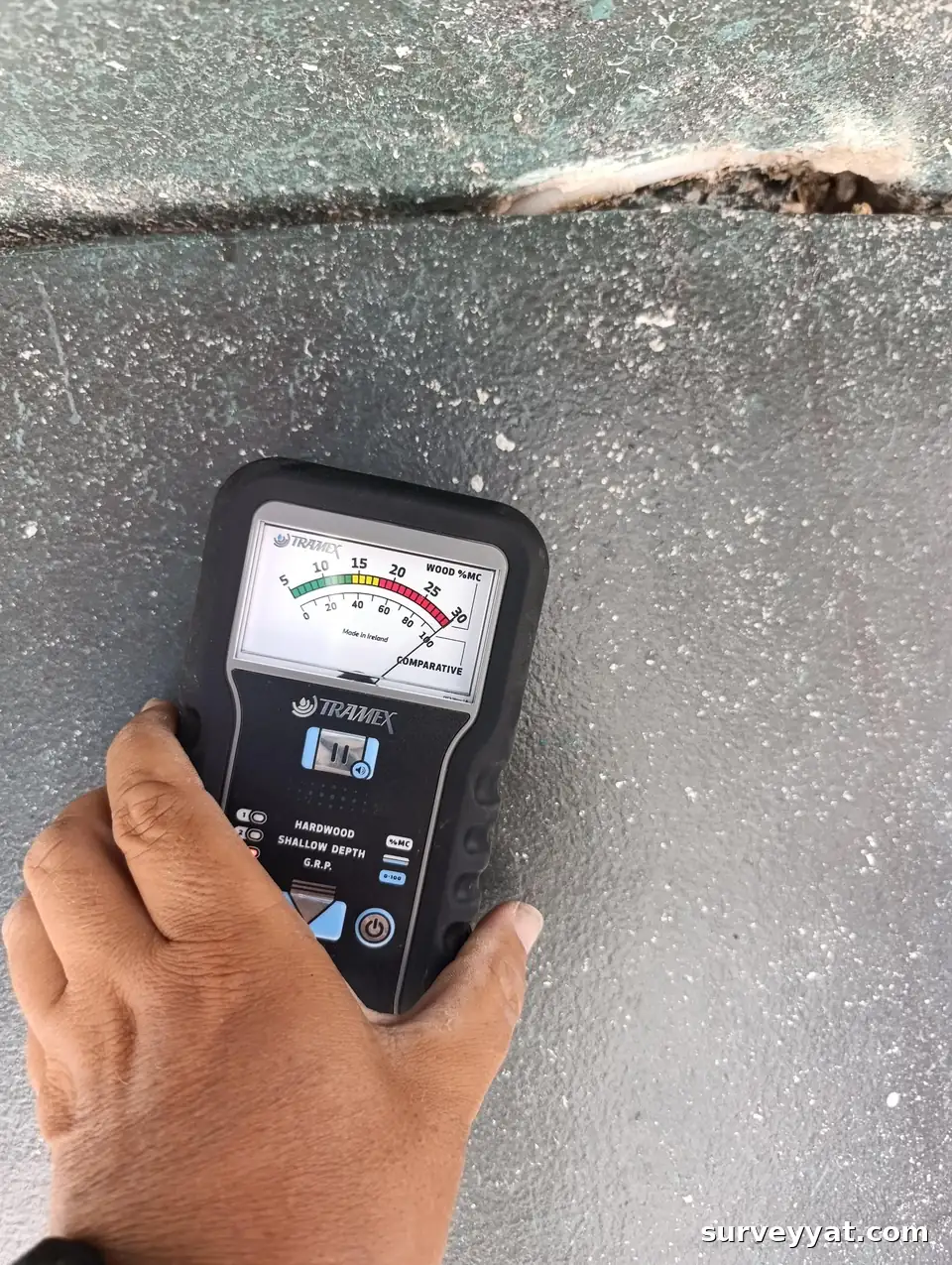
Comparative reading
- Reference. A dry area above the waterline is taken as reference.
- Grid. Underwater hull and deck are read at regular spacing.
- Pattern. What matters is the pattern, not one value: a local rise around a fitting points to a leak, a broad even rise to laminate that has taken on water.
- With sounding. High areas are sounded; a dull note confirms separation.
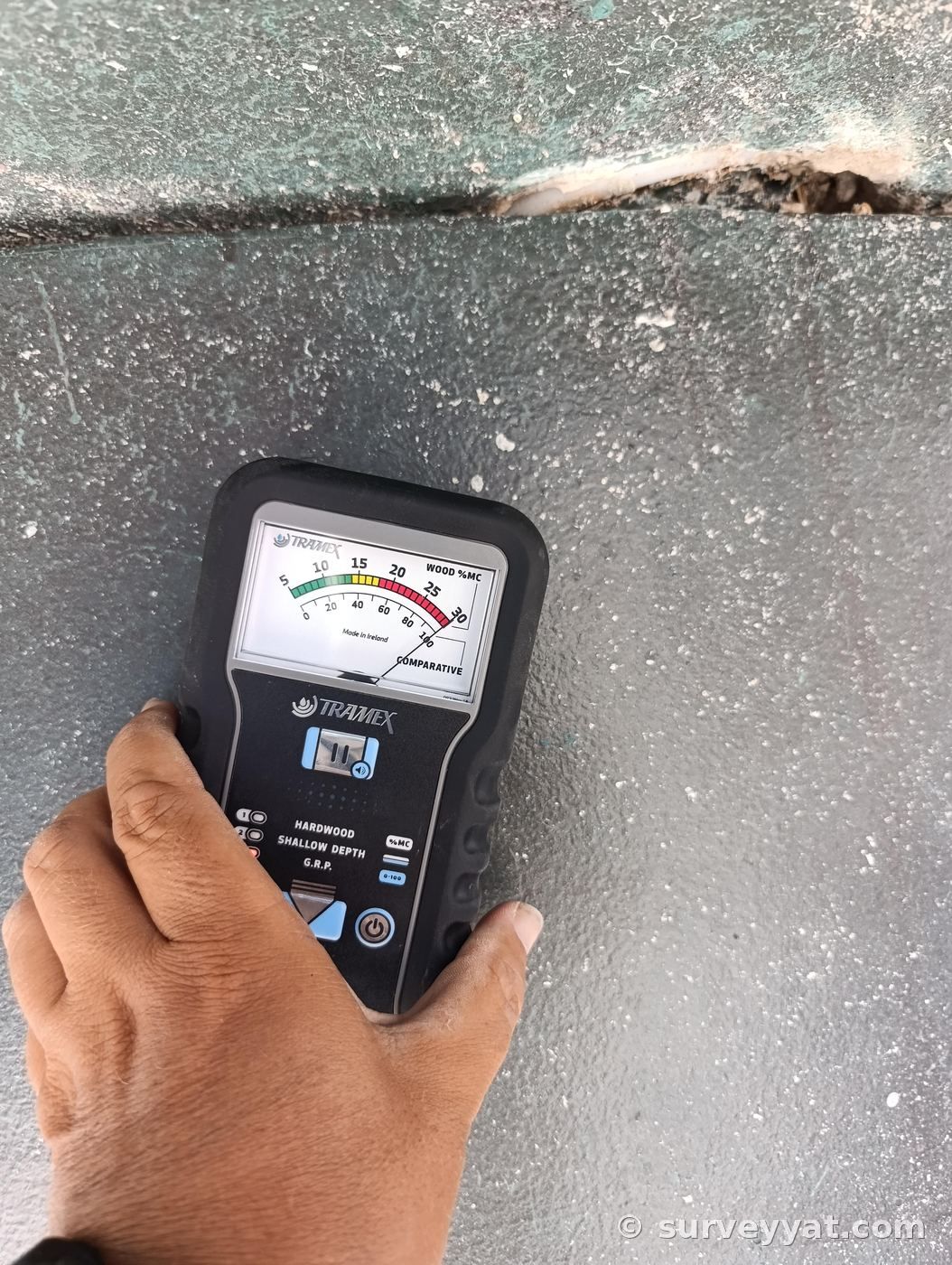
What misleads a reading
- Metal
- Metal reinforcement, tanks or cables inside give high readings.
- Carbon
- Carbon fibre conducts and distorts the reading.
- Copper-based antifouling
- Raises underwater readings; in places, paint is removed to read beneath.
- Surface moisture
- Washing, rain or dew; the surface is dried before reading.
In the report
Values are shown as a moisture map on the hull sketch, with the reference area and conditions (days ashore, weather) noted alongside.
What we often see
- Osmosis blisters below the waterline: Blisters from pinhead to lentil size under the waterline; some weep an acidic fluid when opened.
- Wet core in the transom: High moisture readings and a dull sound in the transom around the ladder and exhaust outlet.
Continue with this topic
- Sounding method: The second method read with moisture.
How readings are interpreted
On a GRP hull, the meter gives a comparative reading, not an absolute percentage. So a reference is first taken on a part of the boat known to be dry, usually above the waterline. Underwater readings are compared with it. The pattern matters, not a single high reading: high values clustered in one area point to a problem; evenly high values everywhere usually come from surface moisture or a boat that has not dried long enough.
Where we look hardest
- The keel joint and surrounding area.
- The rudder blade and where the stock exits.
- Through-hulls and around the propeller shaft.
- Deck fittings and the mast foot.
- Areas repaired in the past.
Why moisture matters
High moisture in laminate can point to osmosis; in sandwich construction, to a rotting core or one separating from its skins. In a rudder blade, water inside rusts the frame. Moisture found early is dealt with by a small repair; found late, it may need a structural one.
The meter must be used on the scale for the material: GRP, timber or shallow depth. The wrong scale makes readings meaningless. Readings are taken with the whole face in contact and even pressure, several per area, and marked on the hull sketch for the report.
Readings are never a verdict on their own; they are read with sounding, visual inspection and the boat's history. The report gives, for each high reading, its likely cause and the recommended next step, so the owner knows exactly what to do.
Every reading is kept on file for comparison later.