The battery bank and charging system decide how long the boat can stay independent of shore. Charged wrongly for their type, batteries, often the system's most expensive part, are used up in a few seasons.
How the system is built
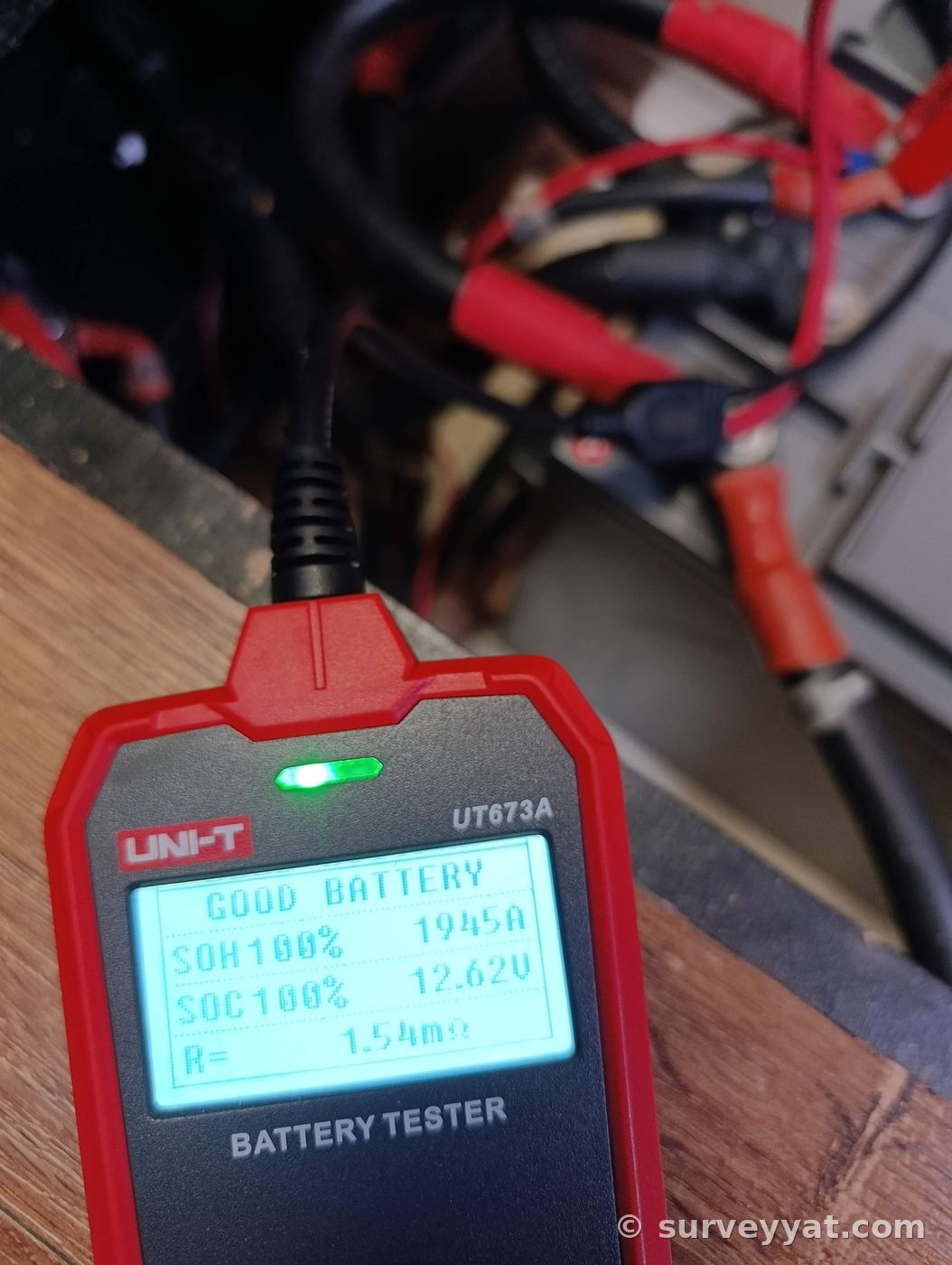
- Banks
- Start battery and house bank separate, with independent charging and protection.
- Battery type
- Lead-acid, AGM, gel or lithium; each has its own charge profile.
- Charging sources
- Alternator, shore charger, solar and wind; each regulator must be set for the battery type.
- Separation
- Split-charge diode, voltage-sensitive relay or DC-DC charger.
- Switching and protection
- Main switch, fuse and cable size.
- Ventilation
- Lead-acid batteries gas while charging; the battery compartment is vented.
Readings
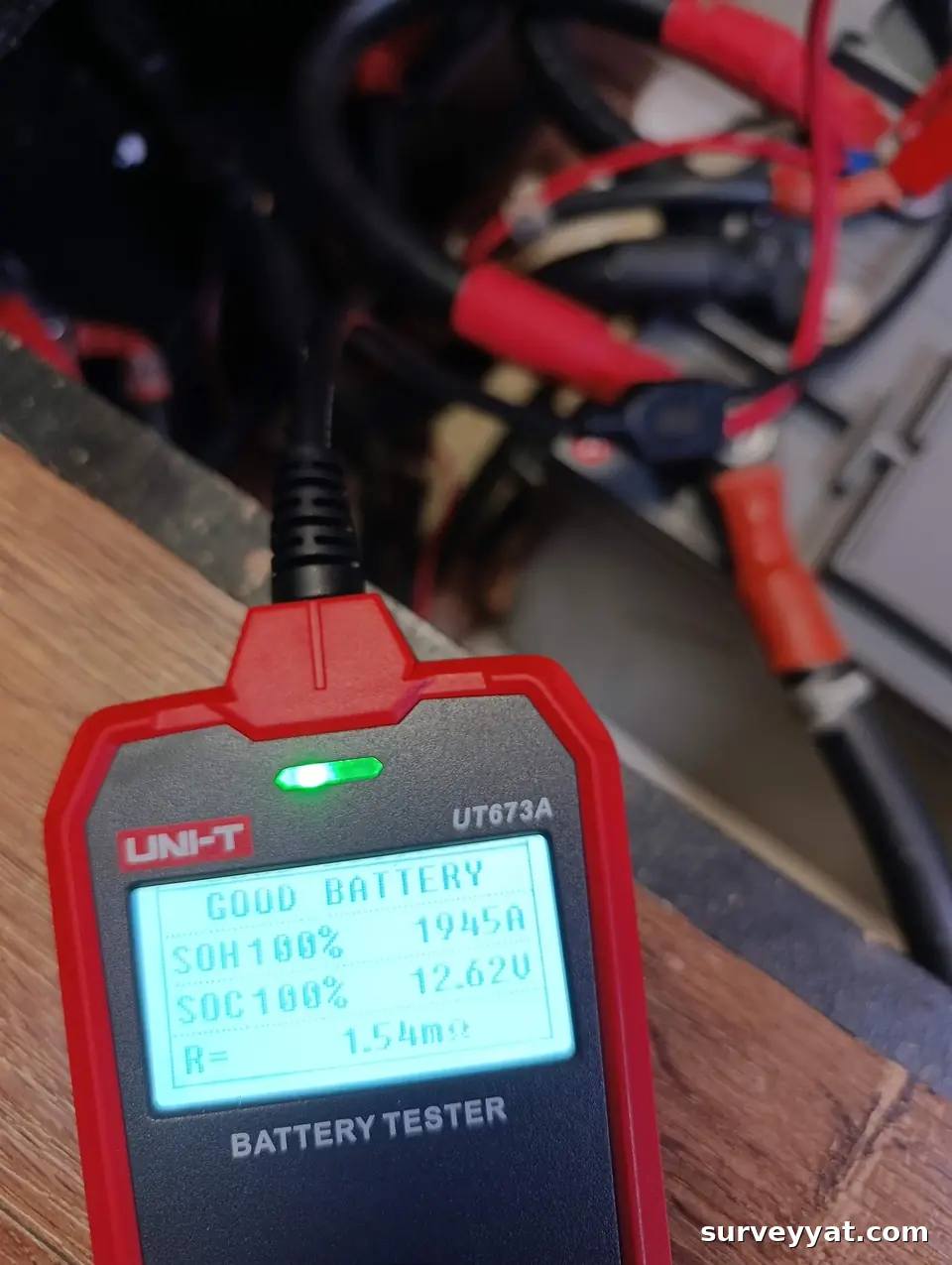
- Internal resistance and capacity with the battery tester.
- Current from each charging source with the clamp meter.
- Parasitic draw with everything switched off.
- Terminals and main connections with the thermal camera.
What we often see
- Overheating electrical connection: On the thermal camera, one pole of the main battery switch is markedly hotter.
Continue with this topic
- Energy system upgrade: From consumption to design.
Battery banks
On many boats batteries are split into two groups: a starter battery for the engine and a house bank for daily consumption. The split means the engine can still be started when the house bank is flat. How the banks are charged, how they are linked and whether they can be paralleled in an emergency are examined.
Measuring a battery
Internal resistance and state of health are measured, not just voltage. A battery that looks full drops fast under load if its internal resistance has risen. A battery tester gives these values in moments. Batteries in the same bank should read close to each other; one weak battery affects the whole bank.
Measuring charging sources
Alternator, shore charger and solar panels are brought in one at a time and their current and charge voltage measured. Charge voltage must suit the battery type; a wrong setting either overcharges or never fully charges.
Connections
Terminals, cable lugs and the main fuse are examined closely; corrosion and looseness cause heating. The thermal camera shows hot connections under load.
Battery age
Manufacture and installation dates are noted. An ageing bank is written into the report as a near-term replacement budget, even when readings are good.
Battery compartment
Ventilation of the battery compartment and securing of the batteries are checked for safety.
Monitoring
Where a battery monitor is fitted, its readings are compared with the tester's; a monitor that has drifted gives the owner a false picture every day.
A monitor that has drifted can also lead to banks being discharged deeper than intended, shortening their life without the owner ever knowing why.
Results for the batteries and charging system go into a table in the report, with conditions. The table becomes the reference for the next check and makes it easier to time a big decision such as replacing the bank, instead of waiting for it to fail on a quiet anchorage far from help.
Keeping batteries charged through winter extends their life markedly; a bank left flat can lose capacity for good.
On shore power, the charger is left in float or maintenance mode rather than switched off.
Batteries then start the season full and healthy.