The shaft line carries the engine's power to the propeller, and passes through a hole in the hull below the waterline. If alignment is off, vibration spreads through the whole line; if the gland fails, the boat takes on water.
The parts of the line
- Coupling
- Joins gearbox and shaft; alignment is measured here.
- Stern gland
- With packing, a little drip under way is normal. With dripless seals (lip or face type), the age of bellows and seals matters; the maker's replacement interval is tracked in the service record.
- Cutless bearing
- The shaft's support in the water. Play felt when the shaft is moved by hand shows wear.
- P-bracket
- Holds the bearing to the hull; cracks and looseness at the root are checked.
- Propeller and anode
- Blade damage, cavitation marks and the shaft anode's condition.
On survey
- Ashore: bearing play, P-bracket, shaft surface, propeller and anode.
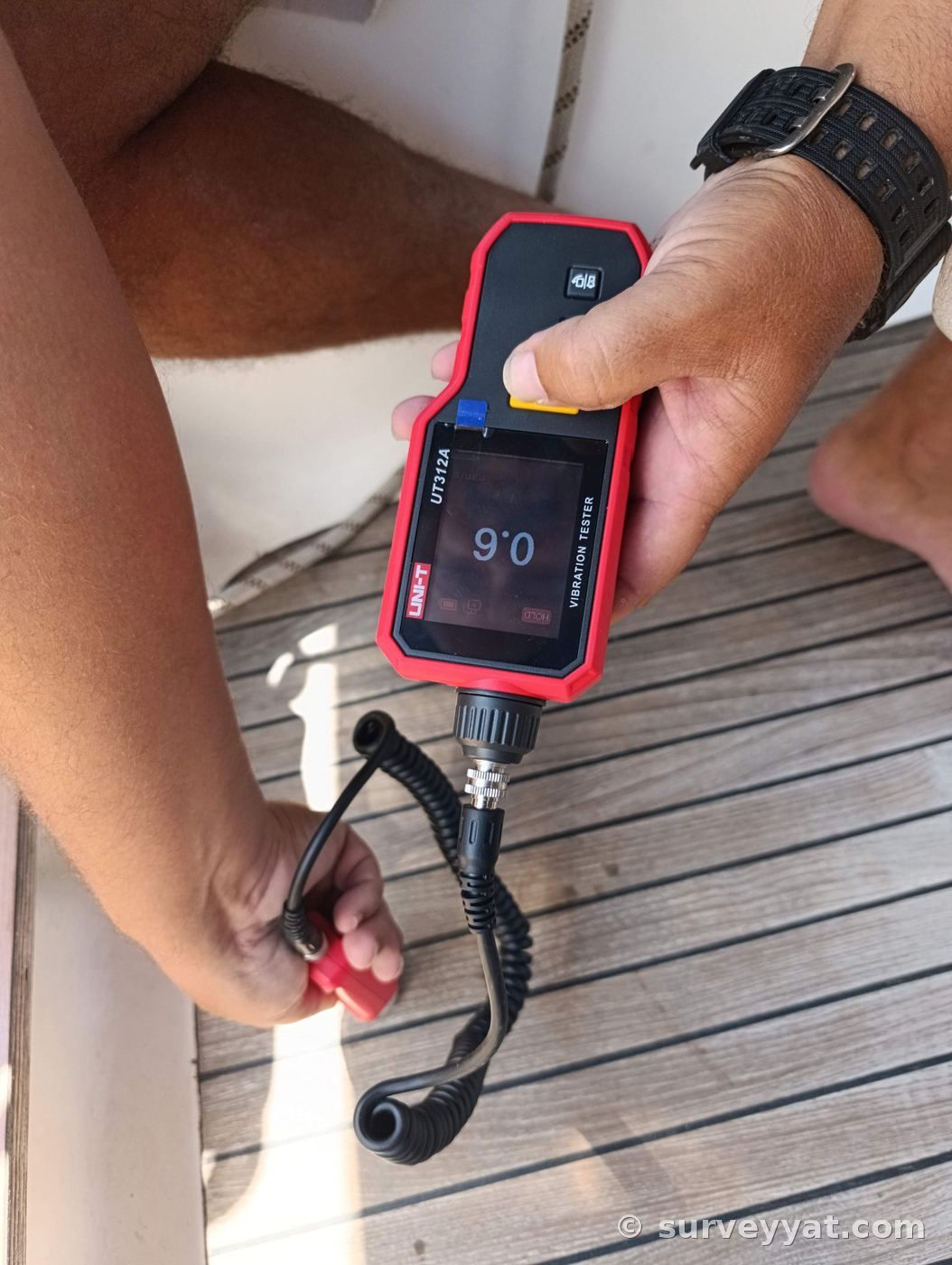
- Afloat: the gland is watched under way; vibration is measured at each rpm step.
- Vibration rising at one rpm points to alignment, mounts or propeller balance.
How alignment is done
- Afloat and settled. Alignment is done after launch, once the hull has settled; a setting made ashore can change afloat.
- Coupling opened. The gap between the two coupling faces is measured around the circumference with feeler gauges.
- Adjust on the mounts. The engine mounts are adjusted until the face gap is within the maker's tolerance.
- Sea trial. Vibration is measured again at each rpm step.
What we often see
- Collapsed engine mounts: Mount rubbers oil-soaked and cracked; the engine sits low on one side.
- Stern gland taking too much water: A continuous drip from the stuffing box under way, with rust and salt around it.
- Propeller cavitation and blade tip damage: Nicks and bends at the blade tips, spongy erosion on the blade face.
Continue with this topic
- Vibration and noise: Reading by rpm.
Packing or dripless seal?
A packed gland is simple and easy to repair; a little drip under way cools the packing and is normal. No drip at all can mean it is over-tightened; a steady stream can mean the packing needs renewing. Dripless systems keep the bilge dry, but need bellows and seals renewed at the maker's intervals. If their age is not in the service record, the survey notes it as "not verified" and recommends renewal, because a failure here means a large water ingress below the waterline.
Causes of bearing wear
- Poor alignment; the shaft presses on the bearing from one side.
- Propeller damage or imbalance; vibration wears the bearing.
- Marine growth around the bearing on a boat that has stood for long.
- Frequent use in sandy, silty water.
Propeller
On the propeller, bent blade tips, nicks on the edges and cavitation marks on the surface are looked for. Even small damage can cause vibration and reduce efficiency. Repair and balancing are done at specialist shops. When the propeller is replaced or engine power changes, the sea trial confirms the new propeller lets the engine reach rated rpm.
After the survey
When a shaft-line finding comes up, the work is usually done ashore: bearing replacement, seal renewal, propeller repair. Alignment is done after launch and confirmed on a sea trial.
Checking the gland under way
Checking the stern gland regularly under way is a good habit: the drip rate, any heat around the gland and unusual noise. A dripless seal should stay dry; damp or water marks mean the seal should be checked.