Vibration and noise are two ways of reading the condition of the engines and shaft line from outside. More than any single value, how they change with rpm and the difference between two engines tell the story.
Vibration readings
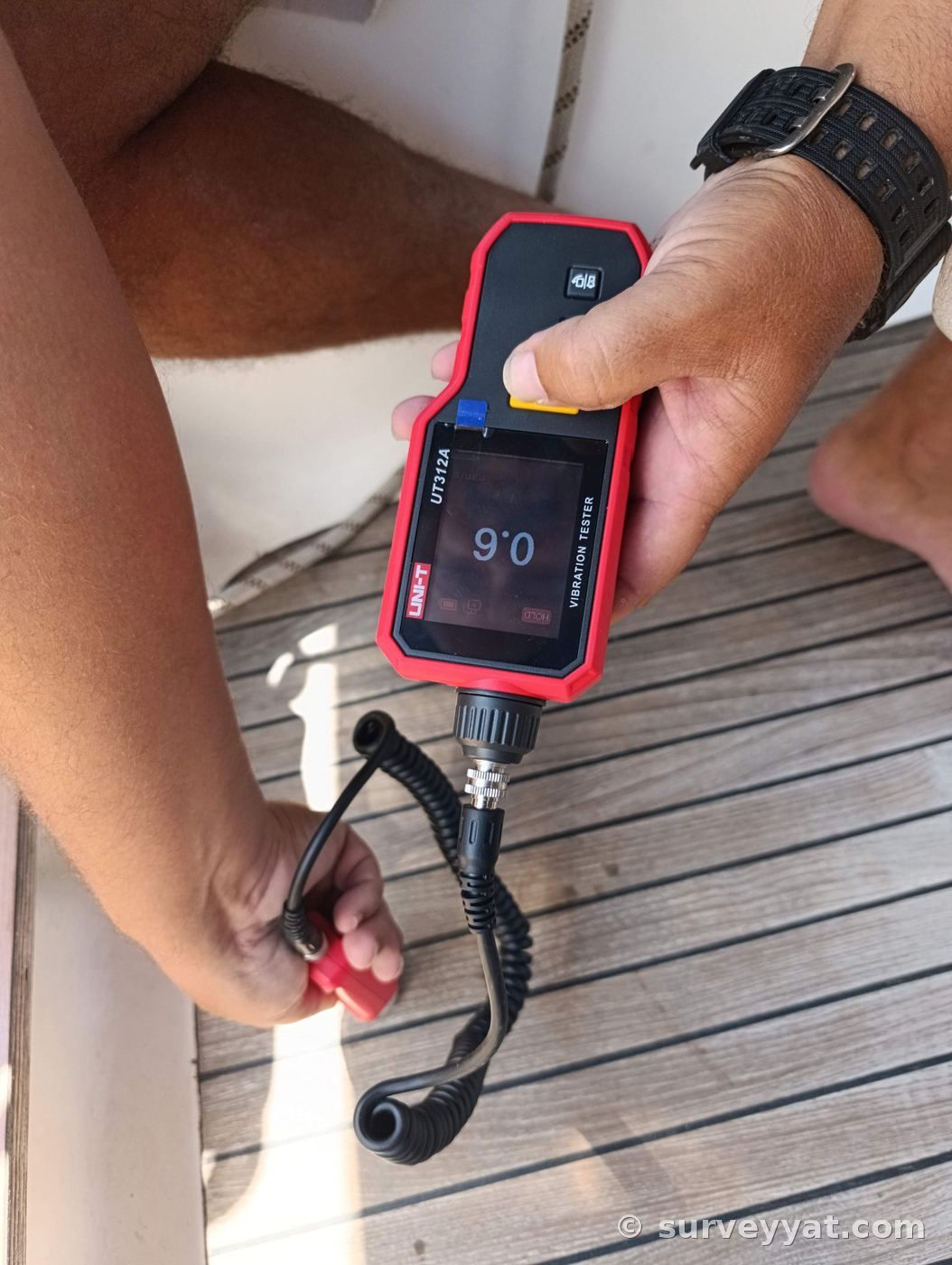
- Points. Fixed measuring points on engine, gearbox and shaft bearing.
- Steps. Readings at set rpm from idle to full throttle.
- Comparison. Between two engines, and across rpm on the same engine.
- Interpretation. Vibration rising at one rpm points to alignment, mounts or propeller balance.
Noise readings
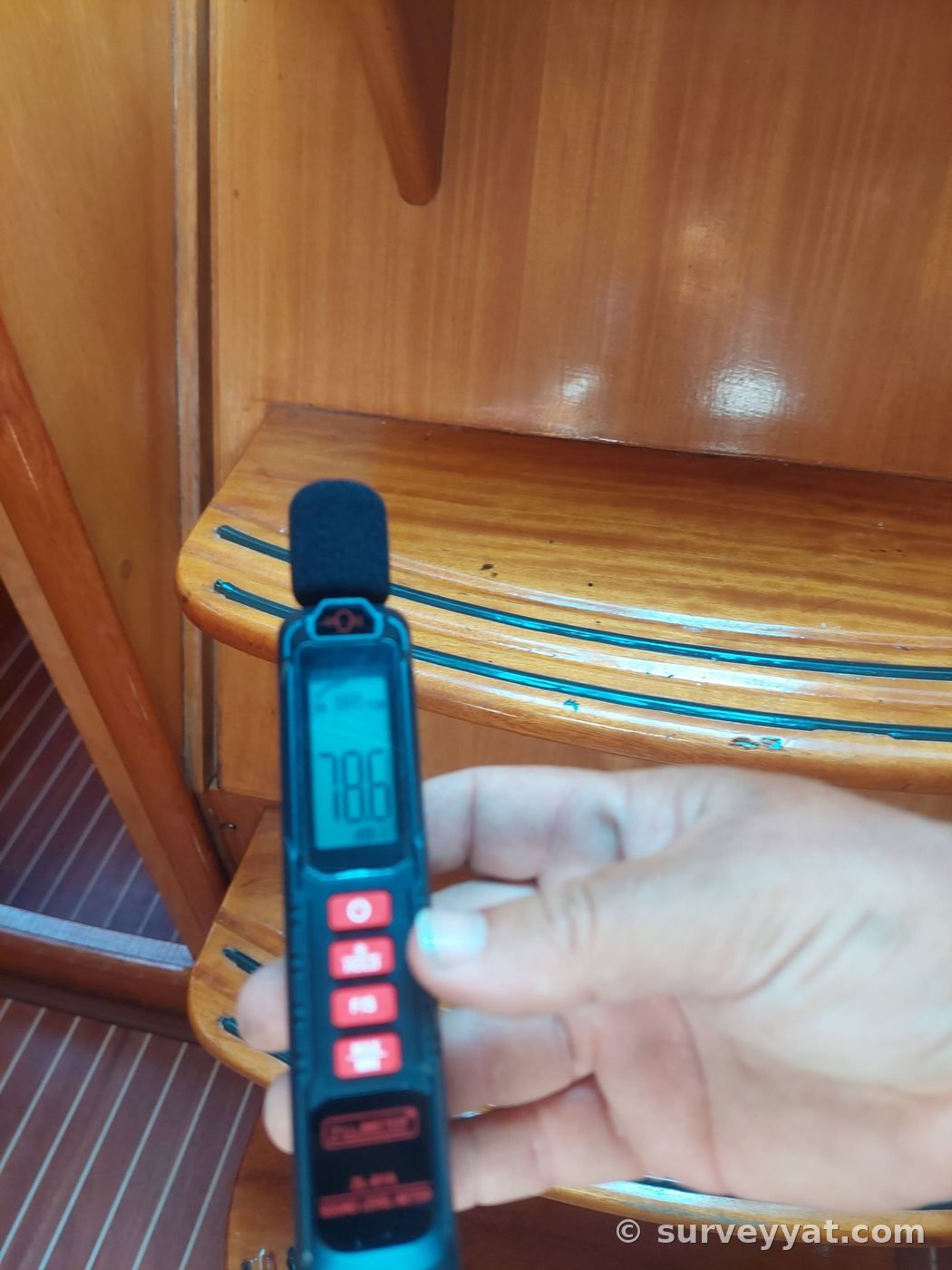
- Decibels in saloon and cabins at the same rpm steps.
- Difference between engines or against earlier readings.
- Unusual sources: exhaust, bearings, engine room insulation.
As a baseline
Values from a first survey become the reference for readings repeated at the same points in later years. Change is the sign that comes before failure.
What we often see
- Collapsed engine mounts: Mount rubbers oil-soaked and cracked; the engine sits low on one side.
- Propeller cavitation and blade tip damage: Nicks and bends at the blade tips, spongy erosion on the blade face.
Why measure?
Vibration and noise are often accepted as "normal", yet measured they can be an early sign of a problem. A small propeller damage, a misaligned shaft, worn engine mounts or a loose connection all raise vibration. Noise level shows both living comfort and where problems are. Measurement bases these on numbers rather than feel.
How it is measured
The vibration sensor is placed at set points such as engine mounts, shaft bearing and stern gland, and read at different rpm. Noise is measured in living areas such as saloon, cabins and helm at the same rpm. Points and rpm are recorded; the same points are repeated at the next measurement.
Difference between sides
On twin-engine boats, vibration on each side is compared. A clear difference on one side points to that side's propeller, shaft or mounts. On single-engine boats, the pattern of vibration changing with rpm gives a clue to the source.
Interpreting values
A single reading is valuable less for comparing with an absolute limit than for following change over time. The first measurement becomes the reference; a rise later shows a problem developing.
Comfort
High noise in living areas tells you about insulation or engine mounts and is weighed in refit planning.
In the report
Values are given in a table with measurement points and rpm.
After work
After propeller repair, alignment or new mounts, repeating the measurement at the same points shows whether the work solved the problem.
The table goes into the boat's file for comparison at the next survey.
The measurements take little time and fit naturally into the sea trial, with no extra day needed. Repeated over the years, they give the owner the most objective picture of engine and drive health, and an early warning long before a problem can be felt or heard by ear.
Numbers catch changes that feel alone would miss, and make decisions easier to justify.
That is why they are repeated on every sea trial we run.
Values appear in the report together with the conditions they were taken in.
Comparison only means something when the points and rpm are the same each time, so both are written down with every reading.